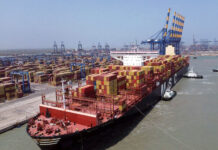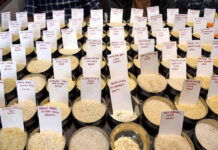
Indian rice exporters are grappling with mounting challenges as global shipping lines sharply increase ocean freight rates, squeezing profits and delaying shipments.
According to a leading Basmati rice exporter, shipping a 20-foot container, which previously cost around $450, now costs nearly $3,700—a jump described as “highly unreasonable.” Exporters also reported that new bookings and shipments to ports linked to the Strait of Hormuz have been completely halted.

Satish Goyal, President of the All India Rice Exporters Association, said that approximately 0.25 million tonnes of Basmati rice remain stranded at Indian ports, including Mundra. Another 0.25 million tonnes of aromatic rice, already in transit or arrived at ports in Iran and other Gulf countries, cannot be unloaded due to ongoing geopolitical tensions.
Ranjit Singh Jossan, Vice President of the Basmati Rice Millers and Exporters Association, Punjab, told Financial Express that shipments to Iran’s Bandar Abbas port are facing “severe operational challenges,” with no clear arrangements for handling cargo. Even consignments that arrived before tensions escalated are stalled due to delays in release orders. Widespread disruptions in Iran’s internet and telecommunications are compounding the issue, affecting communication with local partners.
Iran Remains a Key Market
Iran has traditionally been a major importer of Indian aromatic rice, alongside Saudi Arabia, Iraq, and the UAE. Trade sources confirmed that the Government Trading Corporation of Iran placed an order for around 0.6 million tonnes of Basmati rice last month to boost domestic grain reserves amid fears of potential US attacks.
India has dominated global rice exports for the past decade, accounting for 35–40% of the market. In FY25, rice exports reached a record $12.95 billion, though shipments during April–January FY26 fell 7.5% year-on-year to $9.33 billion.
Historically, payment settlements for Iranian rice imports took 3–4 months, but US sanctions have caused delays, reducing Iran’s share of Indian Basmati exports from 23% in FY22 ($0.81 billion) to 12% in FY25 ($0.75 billion).
Government and Industry Response
Goyal confirmed that the government is reviewing the sudden spike in freight rates. Meanwhile, the Indian Rice Exporters Federation advised members against new CIF (Cost, Insurance, and Freight) commitments to destinations via the Strait of Hormuz, recommending FOB (Free on Board) terms to shift freight and insurance risks to international buyers.