Union Minister for Agriculture and Farmers’ Welfare, Shivraj Singh Chouhan, on Sunday, unveiled 184 improved varieties of 25 field crops developed by the Indian Council of Agricultural Research (ICAR). The launch event was held at the A.P. Shinde Auditorium at the NASC Complex in New Delhi in the presence of scientists, senior officials and agricultural experts.
These include cereals, pulses, oilseeds, fodder, sugarcane, cotton, jute and tobacco, all of which are climate-resilient, high-yielding, biofortified, and resistant to pests and diseases.

Addressing the gathering, the Union Minister said India has achieved unprecedented success in the development of high-yielding seeds. He noted that since the Gazette notification process began in 1969, a total of 7,205 crop varieties have been notified, covering crops such as rice, wheat, sorghum, maize, pulses, oilseeds, fibre crops and others. Under the leadership of Prime Minister Narendra Modi, the pace of developing new varieties has accelerated significantly over the past 11–12 years, with 3,236 high-yielding varieties approved during this period, compared to 3,969 varieties notified between 1969 and 2014.
The newly released 184 improved varieties are expected to provide farmers with higher yields, better quality produce and enhanced climate resilience. Chouhan said these varieties would help farmers cope with changing weather patterns and climate challenges while ensuring stable agricultural production.
The Minister highlighted that the development of these varieties is the result of collective efforts under ICAR’s All India Coordinated Research Projects, involving ICAR institutes, state and central agricultural universities, and private seed companies. Among the 184 varieties, ICAR institutions, agricultural universities and private seed companies contributed 60, 62 and 62 varieties respectively. Several of the new varieties possess special traits such as drought tolerance, tolerance to saline and alkaline soils, and resistance to diseases and pests.
Chouhan said India is entering a new phase of agricultural transformation driven by high-yielding and climate-resilient seeds. He emphasized that these varieties not only offer higher productivity but also improved quality, nutritional value and processing suitability, enabling farmers to secure better market prices while providing consumers with superior food products. He described this achievement as a successful model of the “lab to land” journey.
Reiterating the government’s commitment, the Minister said the goal is to ensure that high-quality seeds reach every farmer’s field so that India can emerge as a food-producing nation not only for itself but for the world. He described agriculture as the foundation of a “Developed India” and noted that India has surpassed China in rice production, achieving a record output of 150.18 million tonnes. He congratulated farmers, scientists, research institutions and the private sector for their contributions to strengthening national and global food security.
Chouhan further said that under Prime Minister Narendra Modi’s leadership, the country is moving towards building a self-reliant and strong India, with agriculture playing a central role. He underlined that seeds are the soul of any production system and that India is now focusing not just on food grain production but also on nutritious food. The 184 new varieties across 25 crops are targeted to reach farmers within the next three years.
He also spoke about enhancing convergence among government schemes, including new initiatives focused on water conservation, agroforestry and animal husbandry. Stressing the importance of increasing pulse and oilseed production, the Minister said improving productivity, ensuring price stability and strengthening processing infrastructure in this sector remain key priorities of the government.
During the programme, 122 varieties of food grain crops were released, including 60 new rice varieties and 50 maize varieties. Improved varieties of sorghum, pearl millet, finger millet, small millets and proso millet were also launched to strengthen nutrition security and climate resilience. Six new pulse varieties of pigeon pea, green gram and black gram were released, along with 13 new oilseed varieties covering mustard, safflower, sesame, groundnut, rapeseed-mustard and castor. Additionally, 11 fodder crop varieties were introduced for the benefit of livestock farmers.
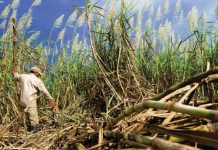
The event also saw the release of six sugarcane varieties and 24 cotton varieties, including 22 Bt cotton varieties. One new variety each of jute and tobacco was also launched, offering better yield and returns to farmers in the respective sectors.
ICAR scientists developed these 184 varieties after years of research, testing and evaluation, keeping in mind diverse agro-climatic conditions, soil types and farming practices across the country.
The programme was attended by Secretary, Department of Agriculture and Farmers’ Welfare, Dr Devesh Chaturvedi, and Director General, ICAR, Dr M.L. Jat, who also addressed the gathering. On the occasion, Chairperson and Managing Director of the National Seeds Corporation (NSC) and Additional Secretary, Ministry of Agriculture, Dr Maninder Kaur Dwivedi, presented a dividend cheque of ₹33.26 crore from NSC to the Union Agriculture Minister.