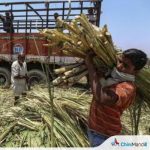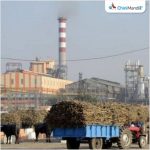
As the sugar industry stepped into 2026, let’s take a look at the developments in 2025. The Indian sugar industry is an important agro-based industry that impacts rural livelihoods of about 5 crore sugarcane farmers & their families and around 5 lakh workers directly employed in the sugar factories. Employment is also generated in various activities relating to transport, trade servicing of machinery and supply of agriculture inputs. India is the second largest producer and the largest consumer of sugar in the world. Today, Indian sugar industry’s annual output is more than ₹1 lakh crore
There were 534 operational sugar factories in the country in sugar season 2024-25. Average annual production of sugarcane is now increased to about 4500-5000 Lakh Metric Tonnes (LMT) which is inter-alia used to produce around 260-300 LMT of sugar after diverting about 30-40 LMT sugar for ethanol production.

As a result of pro-farmers measures taken by the Govt., about 99.9% of cane dues of earlier sugar seasons have been cleared. For the previous sugar season 2024-25 (Oct-Sept), against cane dues payable of Rs. 102687 crores, about Rs. 100501 crores have been paid and only Rs. 2186 crore dues are to be paid. Thus, about 98% cane dues have been paid to farmers.
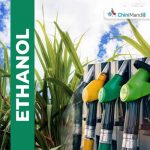
Ethanol blending petrol programme
Ethanol is an agro-based product which is used for blending with petrol as fuel and many other industrial uses including manufacturing hand sanitizers. It is produced from a by-product of the sugar industry, namely molasses as well as starchy food grains. In years of surplus production of sugarcane, when prices are depressed, the sugar industry is unable to make timely payment of cane price to farmers and to find a permanent solution to address the problem of excess sugar and improve the liquidity of sugar mills by helping them to clear their cane dues on time, Government is encouraging sugar mills to divert excess sugarcane to ethanol. Government of India has been implementing Ethanol Blended Petrol (EBP) Programme throughout the country wherein Oil Marketing Companies (OMCs) sell blended petrol. Under EBP Programme, Government has fixed the target of 20% blending of ethanol with petrol by Ethanol Supply Year (ESY) 2025-26.
Till year 2014, ethanol distillation capacity of molasses-based distilleries was less than 200 crore litres. Supply of ethanol to OMCs was only 38 crore litres with blending levels of only 1.53 % in ethanol supply year (ESY) 2013-14. However, in past 10 years due to positive policy interventions made by the Government, existing capacity of ethanol production in the country (as on 31.10.2025) has increased to 1953 crore litres (980 crore liters of grain based and 973 crore liters of molasses/ dual-feed based distilleries). During Ethanol Supply Year (Nov-Oct) 2024-25, 19.24% blending has been successfully achieved. Successful implementation of Ethanol Blended with Petrol (EBP) Programme has led to multiple benefits in various aspects:
Sale of ethanol has resulted in better cash flows for sugar mills resulting in prompt payment to cane farmers. In last 10 years (2014-15 to 2024-25), sugar mills have earned revenue of more than ₹ 1.29 lakh crores from sale of ethanol which has improved the financial condition of sugar mills.
As a result of this effective government policy, investment opportunities worth over ₹ 42,000/- crore emerged, leading to the establishment of new distilleries in rural areas and contributing to direct and indirect employment generation.
Digitization in sugar sector
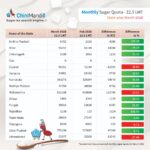
To promote ease of doing business, bringing transparency and to have all the relevant data of sugar mills and ethanol industry at one place, a dedicated module has been developed on National Single Window System (NSWS). DFPD in collaboration with Invest India automated various compliance of the sugar mills on NSWS portal. Also, the monthly information has also been digitalized and about 535 sugar mills are filing the same on monthly basis. Further, to ensure real-time data availability, improve data accuracy and to eliminate redundant data and manual intervention, the process for sharing the monthly data in digitalized form through Application Programming Interfaces (APIs) on National Single Window System (NSWS) has been initiated. In addition to above, a MIS dashboard, namely ‘Chini Darpan’ Portal has also been developed for release of monthly sugar sale quota. This will ensure transparency and accuracy in sugar sales data.