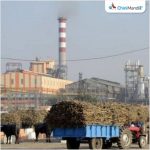

East Java Governor Khofifah Indar Parawansa has said the province is ready to back Indonesia’s push for national sugar self-sufficiency by speeding up the development of sugarcane plantations and related activities, reports Indonesia Business Post.
In a statement issued in Surabaya on Wednesday, December 24, 2025, Khofifah said all district heads in East Java have finished identifying land that can be used to expand sugarcane cultivation. She said close coordination between regions is needed to make sure the land is used properly and to attract investment more quickly.

As part of the national programme, East Java has committed to planting sugarcane on 70,000 hectares, forming the bulk of the 100,000-hectare expansion target set by the central government.
Khofifah noted that East Java has the largest additional planted area for rice in the country at 1.8 million hectares. She said that since rice self-sufficiency has already been achieved, this area must be maintained in 2026, making careful planning of land use essential.
To speed up implementation, Agriculture Minister Amran Sulaiman has given a 90-day deadline for clearing old sugarcane shoots that need to be replaced with new plants across the province. In response, the East Java provincial government has set up a special coordination centre at the Grahadi State Building to oversee and support the process.
Apart from sugarcane, East Java is also preparing to become the first province to establish state-owned facilities for producing Grand Parent Stock, the initial breeding stock used in the poultry industry to produce chicks for commercial farming.
Khofifah said discussions are also under way with several district heads on the National Milk Production Programme to ensure the availability of pregnant cattle. She said these efforts fit well with East Java’s long-standing tradition in livestock farming.
The governor expressed confidence that stronger cooperation between the central government, the province and district administrations would speed up key agricultural programmes, boost the regional economy and improve the livelihoods of farmers, plantation owners and livestock breeders across East Java.