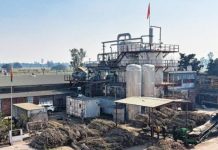
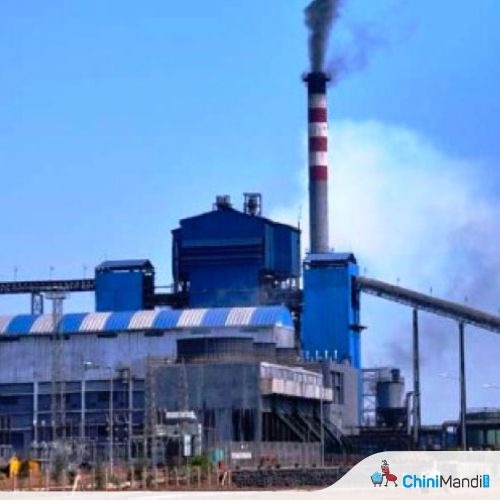
Dhaka : Deshbandhu Sugar Mills Ltd, once a leading name in South Asia’s sugar industry, has shut down its operations after failing to manage a massive debt load, leaving eight banks exposed to unpaid loans of more than Tk3,300 crore, reports The Business Standard.
Bank Asia, one of the lenders, said its internal review found that money was moved from Deshbandhu Sugar to other companies within the Deshbandhu Group. As a result, the mill faced an equity gap of more than Tk1,300 crore by June 2023. This means the company’s total liabilities were higher than its assets, wiping out its own capital and making it unlikely that banks will recover at least Tk1,300 crore even after selling company assets.

Earlier, Bank Asia had identified Deshbandhu Sugar as a wilful defaulter and informed the Bangladesh Bank after its review found misuse of funds. Based on this status, the central bank’s policy committee later turned down the group’s request to reschedule its loans.
However, after an appeal from the Deshbandhu Group, the Bangladesh Bank directed Bank Asia to withdraw the wilful defaulter tag. The move has sparked concern among bankers, as the same bank board that had flagged the company must now approve its removal from the list.
Bank Asia Managing Director Sohail RK Hussain said the bank had filed a criminal case after its review showed that money from sales linked to working capital loans could not be traced. He said the review found that cash generated by the business had been sent to seven related companies instead of being used to repay bank loans.
He added that the company has no current assets against bank loans totalling Tk3,320 crore and that the mill has remained shut since at least January 2025.
Bank Asia said it had already rescheduled Deshbandhu’s loans four times, but the company failed to keep up payments and defaulted again. The bank also sought court orders to restrict overseas travel by the owners, Golam Mostafa and Golam Rahman.
Other lenders to Deshbandhu Sugar include Southeast Bank, Mercantile Bank, NCC Bank, First Security Islami Bank, Agrani Bank, Social Islami Bank and Islami Bank.
First Security Islami Bank and Social Islami Bank have since merged with other weak banks, while Islami Bank continues to struggle with bad loans exceeding Tk1 lakh crore.
The Deshbandhu Group did not respond to allegations of fund diversion. When contacted, Managing Director Golam Rahman said he was unwell and unable to speak. Additional Managing Director Brig Gen (retd) Zakir Hossain said the group plans to seek loan rescheduling by December, following the central bank’s instruction to remove the wilful defaulter status.
Asked why the group failed to repay its loans, he said he could not give an explanation. He also declined to comment on continued investments in other group companies despite unpaid debts.
Banks said Deshbandhu Sugar’s financial condition began worsening in 2012, and the company started rescheduling loans from 2013.
Despite its weak financial position, the group moved ahead in 2024 with plans to set up a fully export-based jumbo bag factory in Palash upazila of Narsingdi, investing Tk300 crore. The project went ahead even as another group company, Deshbandhu Polymer Limited, continued to incur losses.
In its audit report for the year ending 30 June 2025, auditors noted that Deshbandhu Polymer recorded sales of Tk20.48 crore against costs close to Tk30 crore, resulting in a gross loss of Tk9.45 crore. The auditors said the loss level was unusually high for such a business and raised doubts about how inventory and production costs were recorded.
Bank Asia reported Deshbandhu Sugar as a wilful defaulter in December 2024, following Bangladesh Bank guidelines. In May 2025, the central bank’s policy committee rejected the group’s loan rescheduling request.
However, on 8 December, Bank Asia received a letter from the Bangladesh Bank instructing it to take steps to remove the wilful defaulter label. The letter cited the company’s reputation and stated intention to repay as reasons for the decision. It also asked the bank to update the company’s credit status and remove its name from the list, subject to board approval.
This has raised questions among bankers about the role of bank boards, as the same board that earlier approved the wilful defaulter listing is now required to approve its withdrawal.
Asked about the basis for the decision, Bangladesh Bank spokesperson and executive director Arif Hossain Khan said he was not aware of the details and was waiting for feedback from the relevant department. He did not provide further clarification.
The Deshbandhu Group has reportedly been approaching the Bangladesh Bank through the Ministry of Labour and Employment, seeking support through loan rescheduling.
In a letter dated 14 October to Bangladesh Bank Governor Ahsan H Mansur, the ministry urged quick approval of loan rescheduling, fresh working capital and reopening of back-to-back letter of credit facilities to keep the group’s factories running.
The letter described Deshbandhu Group as one of the country’s largest industrial groups, stating that since 1989 it has set up industries in remote areas and created around 25,000 jobs. It noted that several factories remain closed due to a lack of raw materials and funds, with five operating at no more than 25% capacity.
The ministry also warned of a possible labour crisis and called for support to restart operations.
Several Deshbandhu factories stopped production following the political transition after the fall of the Hasina government on 5 August 2024. At present, only five export-oriented garment units are operating at limited capacity.
After the ministry’s intervention, the Bangladesh Bank instructed Bank Asia to remove Deshbandhu Sugar from the wilful defaulter list to allow loan rescheduling to proceed.