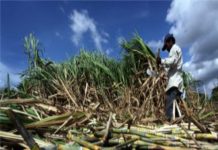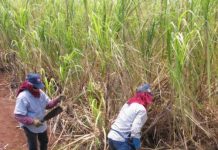
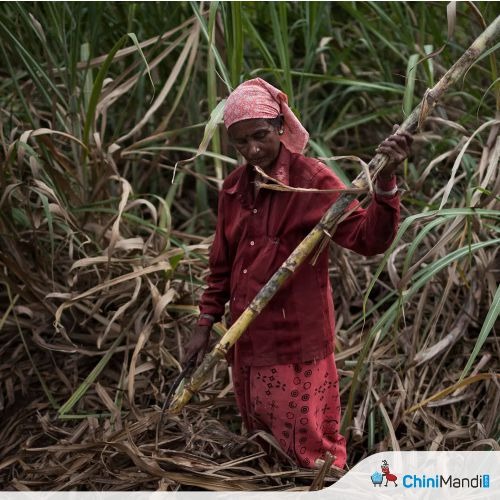
Punjab’s sugar industry is facing a shortage of sugarcane this crushing season, driven mainly by an acute lack of harvesting labour, lower-than-normal yields and a prolonged stagnation in cane acreage. Industry estimates suggest labour availability has dropped by 35–40 per cent, disrupting harvesting operations and leading to weak cane arrivals even during what is typically the peak crushing period, reported The Indian Express.
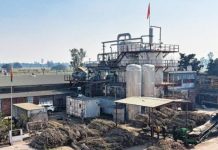
In a departure from past seasons, sugar mills across the state report little pressure on operations. Normally, peak months are marked by congestion at factory gates, long queues of tractor-trolleys and intense demand for harvesting slips. This year, however, most mills are running well below installed capacity, with several expected to shut three to four weeks earlier than usual, as per the news report.

Beyond the immediate labour crisis, farmers and mill officials point to a structural decline in sugarcane cultivation. Punjab once had close to one lakh hectares under cane, but the area has gradually fallen to between 88,000-95,000 hectares. Rising input costs, uncertainty over labour, delayed payments in previous years and limited policy support have prompted farmers to shift to alternative crops and agroforestry.
Sanjay Singh, Vice President (Cane) at Indian Sucrose Mill in Mukerian, Hoshiarpur, said the mill is experiencing a cane shortage for the first time in his 17-year career. “During peak harvesting, we typically receive about 700 trolleys a day. This season, arrivals are fluctuating between 400 and 475,” he said. “There is no pressure to issue harvesting slips. Farmers are getting their cane cut without waiting, which itself reflects the shortage.”
As per the news report, cane yields have also declined sharply. “Earlier, average yields were around 350 quintals per acre. This year, in several areas under our mill, yields have fallen to 200–225 quintals per acre due to poor ripening and a shortened growth period caused by excessive rainfall during the monsoon,” Singh added.
The Mukerian mill started crushing in late November 2025 and is expected to operate until April 10–15, possibly extending to April 20, but at reduced capacity. Across Punjab, most mills are now likely to close by February, much earlier than in a normal season.
Mill officials attribute the supply crunch primarily to a sharp decline in migrant labour from Uttar Pradesh and Bihar, which traditionally forms the backbone of cane harvesting in Punjab. Around 40 per cent of workers did not return this season.
“After certain incidents in Hoshiarpur, some panchayats adopted a strict stance on migrant settlements, discouraging labourers from coming this year,” Singh said.
Pankaj Kumar, General Manager (Cane) at AB Sugars Limited in Dasuya, Hoshiarpur, cited multiple reasons for the labour shortfall. “Because of the Bihar elections, many labourers who usually stay back after paddy harvesting in November went home and did not return. Aadhaar-related issues in several villages and the diversion of labour to states such as Maharashtra, Karnataka and Tamil Nadu further aggravated the problem, particularly in Hoshiarpur and nearby areas,” he said.
AB Sugar mill has 535 notified villages covering about 41,000 acres, with a production potential of 1.40 crore quintals. This season, however, the mill expects to crush only around 90 lakh quintals, with operations likely to end by April 7.
“Earlier, we would reach full capacity within four to five days of starting operations in December. This year, even after 45 days, arrivals are stuck at 400–410 trolleys per day, compared to about 500 earlier,” Kumar said.
As per the news report, similar challenges are being reported at the Nawanshahr, Morinda and Phagwara sugar mills. At Nawanshahr, which sources cane from a 25-km radius, supplies have been constrained by harvesting delays caused by labour shortages, even though the notified area has largely remained unchanged. General Manager G C Yadav noted that younger generations from Uttar Pradesh and Bihar are increasingly pursuing education and non-farm employment, steadily shrinking the agricultural labour pool.