Bioenergy projects are currently operating at seven of the 27 sugar factories that were active in Ukraine during the 2025 sugar season, according to Yana Kavushevska, head of the board of the National Association of Sugar Producers, Ukrtsukor, reports Open4business.
Kavushevska said that while not all companies are ready to prioritise bioenergy projects at present, the sugar sector has already made steady progress in this direction. She said that out of the sugar factories in operation, seven have introduced facilities for producing bioethanol, biogas or biomethane, highlighting the industry’s strong potential for further development.

She added that Ukraine’s sugar industry already has several successful examples of bioenergy projects, most of which were launched before 2022 and later upgraded during the war. In some cases, enterprises have moved from producing biogas to higher-value biomethane.
Biofuel production at sugar factories has been identified as a strategic focus for the industry, as it allows by-products such as molasses and beet pulp to be converted into energy. During the 2025–26 period, the sector has been shifting from basic biogas production for electricity to biomethane, which can be exported to the European Union, as well as to bioethanol.
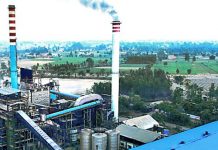
According to Interfax-Ukraine, the largest bioenergy project in the sugar sector has been developed at the Teofipol Sugar Factory in the Khmelnytskyi region. The facility has a capacity of 56 million cubic metres per year and is directly connected to the gas transmission system.
The Globyne bioenergy complex operated by agricultural holding Astarta in the Poltava region has a capacity of 50 million cubic metres per year. It processes sugar beet pulp and supplies biofuel to meet the energy needs of sugar and soybean processing plants.
The Gnidavsky Sugar Plant in the Volyn region produces biogas from beet pulp to cover its own energy needs and also sells surplus power. The facility has a capacity of 6 MW. The Kapitanivsky Sugar Plant in the Kirovograd region has built a 6 MW biogas plant and plans to switch to biomethane, while the Sezhansky Sugar Plant in the Cherkasy region uses pulp and molasses to generate biogas and produce 7.5 MW of electricity.
Bioethanol production in Ukraine is largely based on molasses, a by-product of sugar manufacturing. The Gnidavsky Sugar Plant produces between 15,000 and 20,000 tonnes of bioethanol annually, while the Uzynsky Sugar Plant produces around 10,000 to 15,000 tonnes per year. The Haisyn Sugar Plant, operated by Ukrprominvest-Agro, works with the Haisyn Distillery to process its molasses into bioethanol. The Trostyanets and Zarubinsky distilleries also play a key role in processing raw materials from nearby sugar factories.
The sector also includes the Yuzhefo-Mykolaiv Biogas Complex in the Vinnytsia region, which works with the Yuzhefo-Mykolaiv Sugar Factory to produce more than 11 million cubic metres of biomethane annually using sugar pulp and chicken manure. The facility is among the first in Ukraine to begin producing and exporting bio-LNG.
In addition, the Zhdanivsky Sugar Factory, part of the Astarta group in the Vinnytsia region, supplies raw materials for energy generation. Overall, Astarta’s operations generate around 50–60 million cubic metres of biogas each year.