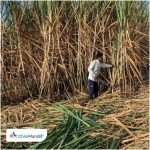

Panipat: Sugarcane farmers in Panipat district have reported an around 15 per cent drop in yield per acre during the 2025–26 season, raising concerns even as the area under cultivation has steadily expanded over the past four years, reports The Tribune.
Along with lower yields, sugar recovery at the district’s sugar mill has also fallen this season. Farmers and officials have linked the decline to several reasons, including heavy rainfall in September last year, disease issues such as Red Rot, and insect attacks like Top Borer, particularly affecting early sugarcane varieties.
Government data show a consistent increase in the area under sugarcane cultivation. The crop covered 24,130 acres in 2021–22, rising to 25,104 acres in 2022–23 and 26,118 acres in 2023–24. In 2024–25, the area expanded sharply to nearly 32,000 acres across the district, as per the news report.
Early sugarcane varieties, including Co 238, CoH 160 and CoH 118, currently account for around 46 per cent of the cultivated area, while mid varieties such as Co 5011 and CoH 119 cover the remaining 54 per cent. The share of early varieties have been shrinking each year as these are more vulnerable to pests and disease, prompting many farmers to shift towards mid varieties, according to officials.
Farmers across the district said the impact on yield has been significant. A farmer from the district cultivating sugarcane on around 20 acres, said excessive rainfall had affected most crops this year. He said that while the sugarcane crop appeared healthy, the weight of the cane had fallen sharply, with losses of nearly 50 to 60 quintals per acre.
Similar concerns were raised by another farmer, who said heavy rainfall during September last year disrupted yield formation. He estimated a reduction of about 50 quintals per acre this season.
Another farmer reported yield losses of 50 to 60 quintals per acre, blaming late and heavy rains for the damage. He said the commonly used early variety Co 238 had become highly prone to disease and insect attacks, especially when late rains created favourable conditions for pests and Red Rot disease.
Farmers pointed out that Co 238 has been in use for nearly 15 years and is now highly susceptible to pests. They said the absence of new early varieties has left growers with limited options and urged authorities to introduce improved varieties.
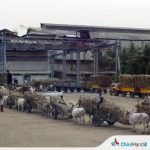
The district has three sugarcane purchase centres located at Hathwala, Bapoli and Sanoli Khurd. Hathwala, the oldest centre, purchases about 4,000 quintals of sugarcane daily, which is then sent to the sugar mill.
Karambir Singh, Cane Development Officer at the Panipat Cooperative Sugar Mill, said around 2,500 farmers were registered with the mill and confirmed that yields had fallen by about 15 per cent per acre this season. He said heavy late rainfall led to good crop growth, but the cane did not gain enough weight, affecting both yield and sugar recovery, reported The Tribune.
He added that factors such as soil conditions, excessive use of urea and a higher share of mid varieties compared to early varieties had also contributed to lower recovery levels.