
New Delhi: Commerce Minister Piyush Goyal on Wednesday said India and the US are complementary economies and the trade deal between the countries is beneficial for both parties.
Since Prime Minister Narendra Modi’s visit to the US in February 2025, both sides have been negotiating for a bilateral trade agreement (BTA) that’s beneficial for both sides.
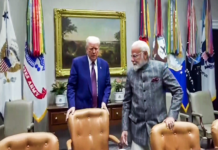
On February 2, a phone call between Prime Minister Narendra Modi and US President Donald Trump led to the announcement of the trade deal.
“Negotiators from both sides have been at various levels over the past year. During the negotiations, both sides safeguarded their important and sensitive sectors from the trade deal, at the same time ensuring maximum benefits for both countries,” Piyush Goyal informed the members in the Lok Sabha, many of whom were apprehensive that the trade deal was detrimental for India.
During these negotiations, Piyush Goyal said the Indian side secured protection for its sensitive sectors, particularly agriculture and dairy.
“There were sectors which were important and sensitive from the US point of view. After negotiations for nearly a year, both sides have been successful in finalizing several areas of the bilateral trade agreement,” he said, speaking in the Lok Sabha, while some of the Opposition members kept raising slogans and made their way into the Well of the House.
“I want to emphasise that the tariffs (under this deal) are lower than those imposed on competing countries, which will increase India’s export competitiveness in the US market. This agreement will provide significant comparative advantages to Indian exporters, particularly in labour-intensive sectors and manufacturing,” Piyush Goyal informed the Lok Sabha
“I wish to reiterate before this august House that the major sensitivities of India…have been fully taken into account. Furthermore, this partnership will create new opportunities for SMEs, MSMEs, skilled workers, and industries, providing streamlined access to advanced technologies.”
This trade deal, he said, is a significant step forward in India’s journey toward Viksit Bharat 2047.
“It reflects the strong bond between the world’s two largest democracies, who are natural partners working together for shared prosperity. I wish to inform the honorable members (in the Parliament) that both sides are completing the necessary technical formalities and paperwork for further action,” he added.
On energy imports and India’s broader stance on them, he reiterated that the government has repeatedly stated that ensuring the energy security of 140 crore Indians is its top priority.
“All actions are taken keeping this in mind. I urge the honourable members to view these issues from a holistic perspective,” he said, perhaps referring to the energy imports fromthe US under the trade deal.
“India and the US are, to a large extent, complementary economies. As India moves toward becoming a developed nation, we need to strengthen our capabilities across sectors including energy, aviation, data centres, and nuclear energy. The US is a global leader in these fields. Therefore, it is natural for us to focus on trade opportunities in these sectors, which will not only expand our procurement but also our exports. We estimate that as a result of comparative advantages, India’s exports to the US have grown significantly in many sectors,” the Minister further said.
“This framework agreement, which will drive global growth and innovation in the coming years, is in the wider interest of the people of India and will greatly benefit the country. It empowers both “Viksit Bharat” and “Atmanirbhar Bharat” (Self-reliant India). We will continue to work tirelessly to realise the Prime Minister’s vision,” he added.
The Trump administration had imposed tariffs on countries that were major exporters to the US, including India and China. There was a 50 per cent tariff on goods from India entering the United States since August 2025. The tariffs have now been reduced to 18 per cent following the leaders’ phone call this week.
The BTA, formally proposed in February 2025 following directives from the leadership of both nations, seeks to more than double bilateral trade, from the current USD 191 billion to USD 500 billion by 2030.
(With inputs from ANI)