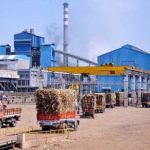

New Delhi: Sugar production in Uttar Pradesh, the country’s largest sugarcane-growing state, declined for the first time this season in January due to lower cane crushing. A mill operated by the Bajaj Group, one of the major producers, shut its crushing operations on January 27 because of limited cane availability. Farmers have also reported reduced yields, with losses reaching up to 30 percent in ratoon crops and around 10 percent in plant crops in some areas, The Hindu BusinessLine reported.
Vijay S. Banka, president of the UP Sugar Mills Association and managing director of Dwarikesh Sugar Industries, said production in Uttar Pradesh this year will be lower than earlier estimated but will remain in line with last year’s output. He added that the final outcome will depend on how the plant crop performs.
Farmers in western Uttar Pradesh have reported significant declines in output. “I harvested 38 quintals per bigha of ratoon sugarcane this year against 55 quintals last season,” said a farmer from Shamli district.
Industry experts estimate the average drop in ratoon yield at 15–20 percent, while noting that it is still too early to assess the plant crop. Ratoon refers to the regrowth from a previous harvest, whereas the plant crop is grown from freshly planted seeds for the 2024–25 season.
Noted sugarcane breeder Bakshi Ram attributed the lower productivity mainly to unseasonal summer rains. “Rains during summer typically reduce cane yield. Western Uttar Pradesh received good rainfall in April–May last year, which is the main reason for the decline,” he said, adding that such weather conditions tend to affect plant crops more than ratoon.
A survey by a private firm covering 52 sugar mills in the state found that 67 percent are using the C-heavy route, while the remaining 33 percent are following the B-heavy route for sugar production. The C-heavy process results in higher sugar output because the molasses retain little sucrose compared with B-heavy molasses.
According to data compiled by the National Federation of Cooperative Sugar Factories Ltd (NFCSF), sugar production in January stood at 19.45 lakh tonnes, down from 20.1 lakh tonnes a year earlier. However, total output for the October–January period reached 55.10 lakh tonnes, compared with 52.70 lakh tonnes in the same period last season. Mills crushed 191.86 lakh tonnes of cane in January, lower than 212.83 lakh tonnes a year ago.
The data also showed that 119 mills were operational in the state until January 15, while 118 were crushing cane as of January 31. Trade sources said the Bajaj Group-owned Pratappur sugar mill in Deoria district, with a capacity of 6,000 TCD (tonnes crushed per day), halted operations on January 27 after crushing 142,052 tonnes this season, compared with 180,980 tonnes by February 2 last year. A query sent to Bajaj Hindusthan did not receive a response.
The Indian Sugar & Bio-Energy Manufacturers Association (ISMA), in its first advance estimate, projected India’s gross sugar production at 343.5 lakh tonnes for the 2025–26 season, slightly lower than 349 lakh tonnes in 2024–25. Net production is estimated at 309.5 lakh tonnes after accounting for the diversion of 34 lakh tonnes of sugar equivalent for ethanol.
ISMA had earlier stated in November that Uttar Pradesh’s gross sugar production, before diversion, could reach 103.2 lakh tonnes in 2025–26, compared with 101.01 lakh tonnes last season, despite a 3 percent decline in acreage, as improved yield and recovery were expected to support output.