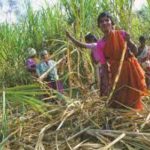
Karnataka: Sugarcane farmers in Tadakal and nearby villages of Aland taluk have nearly doubled their yield after adopting Artificial Intelligence-based farming methods. The technology, introduced for the first time in the state, has also helped reduce cultivation costs by 30 to 40 per cent through precise irrigation management, Deccan Herald reported.
The AI system guides farmers on when to irrigate and how much water and nutrients to apply to the crop. Farmers in the region have adopted this model after observing similar practices in the sugarcane belt of Baramati in Maharashtra.

NSL Sugars is supporting farmers cultivating on 500 acres under its command area by providing advance funds to help cover cultivation expenses. The initiative is being carried out in partnership with the Krishi Vigyan Kendra (KVK) of Baramati and Microsoft.
As part of the programme, farmers have installed various sensors in their fields, including soil moisture monitors, flow meters, canopy and leaf-wetness sensors, and GPS-based yield tracking systems. These tools provide real-time information from the farms.
The system also includes AI-based analysis, automated irrigation control, and planned watering schedules, helping farmers make informed decisions and improve sustainability.
A weather station has been set up within a three-kilometre radius of the sugarcane fields. The equipment provides data on climate conditions, rainfall forecasts, temperature changes, and the possibility of sudden rain. It also monitors soil moisture, temperature, nutrients, pests, and crop growth with the help of satellite data.
Officials from KVK Baramati send alerts to farmers’ mobile phones about pest attacks and water management based on the collected information.
Farmers say productivity can be increased and fertiliser waste reduced by planting sugarcane with six feet of spacing between rows instead of the usual three feet. They explained that wider spacing improves air circulation and sunlight exposure, which supports better growth.
One of the farmers, who cultivated sugarcane on 18 acres and achieved a yield of 105 tonnes per acre, said wider spacing improves photosynthesis and increases sugar content in the crop.
Another farmer from Tadakal village, who works as a software engineer, said he has improved water and fertiliser use through a comprehensive drip irrigation system, resulting in nearly a 40 per cent rise in yield. He added that he plans to further enhance production by adopting AI technology.
The factory plans to provide training and sensor-based equipment to farmers who adopt AI-based farming. It also aims to expand the area under this technology.
According to the factory’s deputy general manager Ambrishi Kadam, the use of AI can help save 30 per cent water and 40 per cent fertilisers while increasing yield by 40 per cent, as water and nutrients are delivered directly to the root zone through drip irrigation.
NSL Sugars unit-2 chairman G R Chintala said the factory has decided to provide advance assistance equal to 50 per cent of the sugarcane cultivation cost to growers in its command area.