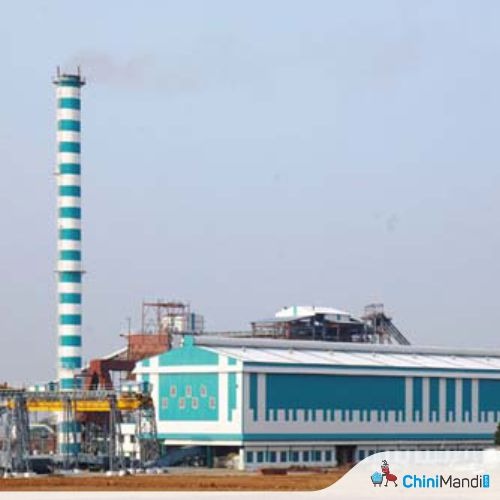
In a move aimed at supporting loss-making cooperative sugar factories, the Maharashtra government has cleared a new policy that will allow them to set up projects to process sugarcane by-products with the help of private investors, Business Standard reported.
The policy permits factories to develop units based on by-products such as bagasse, molasses, and press mud under the Build-Operate-Transfer (BOT) and Build-Own-Operate-Transfer (BOOT) models. The decision is intended to help mills raise additional income without increasing their financial burden.

A Government Resolution issued by the state’s Cooperation, Marketing and Textiles Department on February 26 lays down clear eligibility rules, approval procedures, and safeguards for projects that will be developed through private investment.
Maharashtra is one of the country’s largest sugar-producing states, and cooperative mills have played a key role in supporting rural economies. However, many factories have been facing mounting losses, negative net worth, and exhausted borrowing limits, leaving them unable to invest in new income-generating ventures.
The new framework seeks to help mills earn from by-products that can be used for setting up co-generation power plants, distilleries, ethanol units, biogas and compressed biogas plants, hydrogen projects, sustainable aviation fuel units, carbon dioxide recovery plants, bio-plastics, organic chemicals, and soil conditioners, among other activities.
Under the BOT and BOOT arrangements, a private developer will build the project at its own expense and operate it for a fixed period, usually between five and 10 years. After the agreed period, the project will be transferred to the sugar factory. The total agreement period cannot exceed 15 years.
According to the order, a cooperative sugar factory will be treated as financially stressed if it has reported accumulated losses for three consecutive years, had a negative net worth for three years, exhausted its borrowing capacity, received a ‘C’ or ‘D’ audit classification for three years, operated at less than 50 per cent crushing capacity for three seasons, or has pending government dues.
Financially stable mills are also allowed to adopt the BOT or BOOT route.
Before signing any agreement, the factory’s board must pass a resolution and secure prior approval under Section 20(A) of the Maharashtra Cooperative Societies Act, 1960.
A detailed project report must be prepared through a government-approved agency, covering capital costs, operating expenses, and the expected payback period. Projects costing up to Rs 5 crore, including taxes, will be cleared by the sugar commissioner, while those above this limit will require approval at the government level.
Developers will be selected through a transparent e-tender process after an Expression of Interest is invited. The selected private partner will have to deposit an interest-free security amount equal to one year’s lease rent.
The lease rent for factory land will be fixed at the prevailing ready reckoner rate or the rate assessed by a government-approved valuer, whichever is higher.
Under the policy, the private developer will be responsible for obtaining all required permissions, environmental clearances, insurance, and compliance with legal provisions. The developer will also bear responsibility for labour law compliance, employee benefits, taxes, and any financial liabilities during the contract period.
At the time of transfer, the project must be free of bank loans, unpaid wages, supplier dues, and government liabilities.
In case of disputes, the policy provides for mutual discussions, mediation, and arbitration, with the option to approach courts if necessary. All contracts must include an arbitration clause. Developers who abandon projects, violate terms, or are declared bankrupt may face termination, forfeiture of security deposits, recovery of losses, and blacklisting.
Factories will have to submit quarterly progress reports, and the projects will be subject to independent audits by certified chartered accountants. Regional joint directors (sugar) will carry out regular monitoring.
The government has directed that income earned from BOT and BOOT projects should first be used to clear government dues, including share capital, loans, and statutory payments such as Fair and Remunerative Price obligations to farmers.
Officials said the policy is expected to help cooperative sugar mills widen their income sources, improve their financial position, and strengthen their ability to clear cane payments, while drawing on private investment and expertise for new-generation bio-energy and value-added projects.