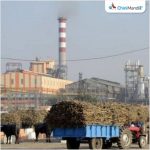

Australian Sugar Manufacturers (ASM) is calling on the Australian Government to act now to strengthen its fuel security and protect regional industries as global instability in the Middle East threatens up to 20 per cent of the world’s oil supply, it stated in a press release.
ASM Chief Executive Officer, Ash Salardini said a national bioethanol fuel mandate is essential to reduce Australia’s exposure to global fuel shortages and securing the long-term future of Australia’s sugar manufacturing sector.

“Australia needs a plan immediately to secure the future of our domestic fuel supply,” said Australian Sugar Manufacturers Chief Executive Officer, Mr Ash Salardini.
“With the Strait of Hormuz currently closed due to ongoing conflict in the Middle East, blocking 20 per cent of global oil supply – Australia doesn’t really have a plan A, let alone plan B.”
A SOVEREIGN CAPABILITY WITHIN REACH
The Australian sugar industry contributes $4.4 billion annually to the national economy and supports more than 20,000 regional jobs nationally, with a strong footprint across Northern Australia. From 30 million tonnes of cane produced each year, the sugar manufacturing sector generates:
– 10 million tonnes of bagasse
– 2 million tonnes of molasses
– Significant volumes of cane juice
These feedstocks alone provide the foundation for sovereign biofuels and bioenergy capability.
“With the right national policy settings, our industry could meet more than 30 per cent of Australia’s domestic aviation fuel demand, provide significantly more ethanol for use in passenger vehicles, and help secure defence fuel supplies through regionally co-located biofuel facilities,” said Mr Salardini.
“However, none of this will occur without decisive action from the Federal Government.”
GLOBAL REALITY – COMPETING AGAINST SUBSIDISED NATIONS
Mr Salardini said Australia’s sugar industry remains globally competitive, ranked in the top 40 per cent on cost,
but is increasing under pressure from heavily subsidised international competitors. “Countries like Brazil and India treat sugar and biofuels as sovereign capabilities,” said Mr Salardini.
“India subsidises its mills at up to 150 per cent of production costs. This is not a level playing field – and the result is deeper and harsher troughs in global sugar prices designed to eliminate competitors like Australia.”
Global sugar prices have fallen below 14 US cents per pound, down from more than 25 cents less than two years ago. These depressed conditions are expected to persist into 2027.
“If nothing changes, between one and three Australian sugar mills could close by the end of 2027, equivalent to losing 15 per cent of national capacity,” Mr Salardini said. “This would mean lost jobs, lost regional economic activity, and potentially the decline of entire regional towns.”
THE CASE FOR A NATIONAL ETHANOL MANDATE
Australian Sugar Manufacturers is calling for a national ethanol mandate as a cornerstone of Australia’s fuel security strategy. Globally, petrol can commonly contain 10 per cent ethanol, where E10 can deliver octane ratings of RON 95 and remain compatible with passenger fleet. In Australia, the effective national blending sits at between 1 – 2 per cent. “A modest increase to ethanol blends via a national ethanol mandate would deliver the cheapest form of liquid fuel emissions abatement available over the next decade” said Mr Salardini.
“Importantly, it will add weeks of supply to our woefully low liquid fuel reserves in Australia, mitigating our exposure to global shocks.”
“It would unlock a large-scale domestic bioethanol industry, strengthening regional economies and reducing reliance on imported fuels.”
As road transport electrifies over time, ethanol could be redirected into sustainable aviation fuel production-one of the most viable pathways to scale low-carbon liquid fuels for hard-to-abate sectors.
A TRANSFORMATIONAL OPPORTUNITY FOR NORTHERN AUSTRALIA
Australian Sugar Manufacturers submission to the Joint Standing Committee on Northern Australia outlines a government-industry partnership to capture the biofuels and bioenergy opportunity while safeguarding the long-term viability of Australia’s sugar manufacturing base. “This is not about incremental tweaks. This is about securing sovereign industrial capability in a world that has fundamentally changed,” said Mr Salardini.
“The payoff nationally could be transformational: a future-proofed sugar industry, sovereign low-carbon liquid fuel capability, billions in regional economic activity, and thousands of high-value jobs across Northern Australia.”
“For Australia the choice is clear – act decisively to build sovereign capability or risk losing the Australian sugar
manufacturing sector forever”, said Mr Salardini.