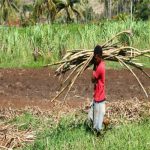

Researchers at James Cook University are combining machine learning with satellite imagery to detect sugarcane diseases prior to manifestation.
Under the leadership of Professor Mostafa Rahimi Azghadi, the team has created a software tool that effectively distinguishes between healthy and infected sugarcane.

“RSD can diminish sugar yields by as much as 60% and spreads rapidly. However, due to its asymptomatic nature, it remains undetectable to the naked eye until later in the growing season,” Professor Azghadi explained.
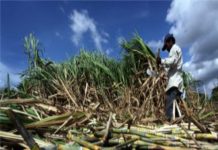
Traditionally, RSD is diagnosed through manual cutting and sampling of sugarcane, followed by laboratory DNA analysis of the samples.
“This process is labor-intensive and costly, especially when scaling up, as each test costs around $10-15,” noted Professor Azghadi.
“Our method achieved accuracy rates between 86% and 97%, depending on the sugarcane variety… which is comparable or superior to existing crop disease detection tools.”
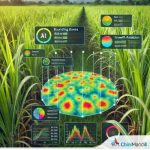
The research employed various machine learning methods to identify RSD across different sugarcane varieties, leveraging vegetation indices derived from publicly available Sentinel-2 data.
Ground truth samples were collected from 76 sugarcane blocks in Queensland’s Herbert region. This dataset was gathered by trained agronomists from Herbert Cane Productivity Services.
The findings indicate that machine learning algorithms “can successfully classify RSD across multiple varieties using freely available multispectral satellite data.”
“The ultimate goal is to create an early-warning system that assesses disease risk while monitoring overall crop health, facilitating better management of agricultural productivity.”
“It will function similarly to regular medical check-ups for general practitioners but tailored for sugarcane and other crops.”