The Government of India today held the fourth inter-ministerial media interaction at the National Media Centre to provide updates on the situation arising from recent developments in West Asia. Similar briefings were earlier held on 11, 12 and 13 March 2026. Senior officials from the Ministry of Petroleum and Natural Gas, Ministry of External Affairs, Ministry of Ports, Shipping and Waterways, and Ministry of Information and Broadcasting shared updates on energy supply, maritime operations, the welfare of Indian nationals in the region and related communication measures, PIB reported.
Energy Supply and Fuel Availability

The officer from the Ministry of Petroleum and Natural Gas briefed the media on the fuel supply situation in the country and the arrangements to ensure continued availability of petroleum products and LPG, in view of the prevailing geopolitical developments and the situation relating to the Strait of Hormuz. As per the Ministry:
Crude/Refineries
All refineries are currently operating at high levels and maintaining adequate crude oil inventories. Further, our country is self-sufficient in the production of petrol and diesel, and no imports of Petrol & diesel are required for meeting domestic demand.
Retail Outlets
No cases of fuel dry outs have been reported at any of the ROs by the Oil Marketing Companies. The Government advises the public not to resort to panic buying, as adequate stocks of petrol and diesel are available and supplies are being maintained regularly.
Natural Gas
Priority sectors have been protected for their supplies including 100% supply to PNG and CNG with no cuts. So, there is no need to panic. Supplies to industrial & commercial consumers are being regulated at 80%.
GAIL held VC with City Gas Distribution (CGD) entities authorized in major urban centres/cities e.g. Delhi, Mumbai, Ahmedabad, Hyderabad, Chennai, Bangalore, Lucknow, Kanpur, Jaipur etc. in the country and advised them for expediting and promoting new commercial PNG connections for hotels and restaurants so as to reduce pressure on LPG supplies.
LPG
Supply of LPG is still a concern in view of prevailing geopolitical situation.
No reported dry-out at LPG distributorships.
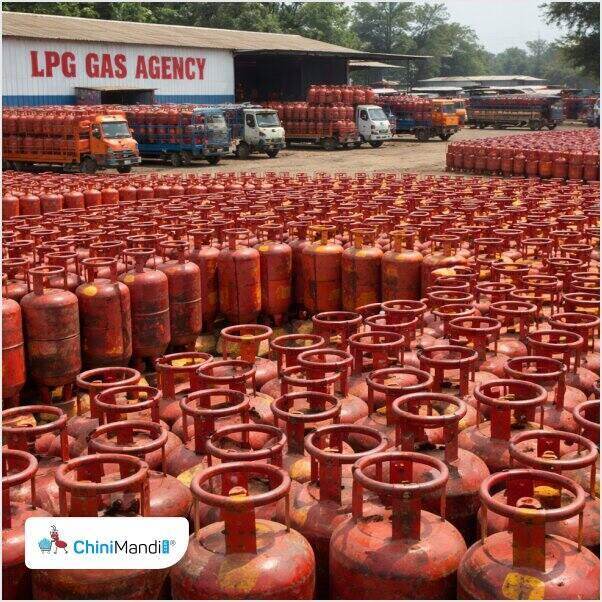
There has been surge in the number of LPG bookings on account of panic buying. Daily bookings have increased from avg. 55.7 Lakh to 88.8 Lakh yesterday.
Commercial Cylinders for consumers have been put at the disposal of State Government for priority distribution. Commercial LPG have been made available to consumers in 29 States/UTs.
Online bookings of cylinders at present is 84%.
Meetings conducted by State Government
The role of State/UT Governments is very important in monitoring supply situation of essential commodities including Petrol, Diesel and LPG.
Hon’ble Chief Ministers of Haryana and Goa have conducted meetings with senior government officials and top officials of oil companies to review the demand and supply situation of LPG in the state.
Telangana Chief Secretary reviewed the LPG stock position, supply, and distribution to consumers with representatives of oil marketing companies and officials of the Civil Supplies Department.
Meeting was also conducted by Oil Companies with Andhra Pradesh’s Commissioner of Civil Supplies and appraised him of all the developments w.r.t LPG, PDS SKO and Commercial LPG.
17 States/UTs have setup control rooms to monitor situation and many States/UTs are doing press briefs also.
Enforcement action
State Governments/UTs are playing a key role in preventing hoarding and black marketing of essential commodities including Petrol, Diesel and LPG.
In Maharashtra and Rajasthan, joint inspection teams of the Food & Civil Supplies Department and Oil Marketing Companies conducted raids at multiple locations. PSU OMCs also carried out around 1300 inspections at LPG distributorships yesterday.
In Uttar Pradesh, enforcement teams inspected 1,483 locations; 24 FIRs were registered (4 against LPG distributors and 20 against individuals), 6 persons were arrested and prosecution initiated against 19 individuals.
Raids have also been conducted in several States including Andhra Pradesh (Tirupati), Bihar, Odisha and Karnataka to check hoarding and black marketing of LPG.
Other Government Measures
Government’s highest priority is to ensure uninterrupted Domestic LPG supply, particularly for households and priority sectors such as hospitals and educational institutions. LPG production from refineries has also been increased by about 31%.
CAQM order dated 13.03.2026 permits temporary use of biomass/RDF pellets in place of natural gas by industries, hotels and restaurants in NCR for one month; coal or kerosene may be used where alternatives are unavailable. Rationalisation measures include increasing LPG booking intervals (25 days in urban areas and up to 45 days in rural areas). An additional 48,000 KL of kerosene has been allocated to States/UTs and alternate fuels like kerosene and coal are being used to reduce pressure on LPG in the hospitality sector.
PSU Oil Companies have been asked to promote digital LPG bookings, discourage panic booking and avoid unnecessary visits to dealerships.
Public Advisory-
Citizens are advised not to panic. The Government is committed to maintaining LPG availability for households and essential sectors.
LPG cylinders can be booked easily through digital platforms such as IVRS calls, SMS, WhatsApp and mobile applications of the Oil Marketing Companies. Consumers are advised to book cylinders from home and avoid visiting LPG distributors unnecessarily.
Citizens are requested to avoid panic bookings and use digital modes for booking to prevent crowding at LPG agencies.
Consumers may opt for alternative fuels like PNG wherever available, and are requested to trust Oil Marketing Companies which have been reliably supplying LPG for decades.
Media is requested to disseminate correct information and rely on official sources. Detailed updates are available on the social media pages of MoP&NG and PSU Oil Marketing Companies.
Maritime Safety and Shipping Operations
The Ministry of Ports, Shipping and Waterways briefed the media on the prevailing maritime conditions in the Persian Gulf region and the steps being taken to ensure the safety of Indian seafarers and vessels operating in the area. It said:
No new shipping incident involving Indian seafarers has been reported in the past 24 hours. All Indian seafarers in the region are safe.
Of the 24 vessels in the Persian Gulf region (west of the Strait of Hormuz) till yesterday, two Indian-flag LPG carriers — Shivalik and Nanda Devi — carrying about 92,712 MT of LPG crossed the Strait of Hormuz early this morning. They are scheduled to reach Mundra Port and Kandla Port on 16 and 17 March respectively.
There are currently 22 Indian-flagged vessels with 611 seafarers in the Persian Gulf region. DG Shipping is closely monitoring the situation with ship owners, RPSL agencies and Indian Missions.
In the past 24 hours, DG Shipping Control Room handled about 312 calls and 460 emails from seafarers, families and maritime stakeholders. Over the past 15 days, it has handled 2,737 calls and more than 4,900 emails.
A Quick Response Team at DG Shipping is operating 24×7 and coordinating with shipping companies, embassies, MEA and P&I Club insurers. Concerns of around 1,300 seafarers and their families have been addressed.
In the past 24 hours, 30 seafarers have been repatriated from airports and regional locations across the Gulf, taking the total repatriations to 253.
The Government is working with ports, shipping lines and logistics stakeholders to minimise operational impact on maritime trade.
Ports have been advised to provide relief measures such as concessions in anchorage, berth hire and storage charges. Lease extensions have also been granted in certain cases, including for 25,000 MT barytes cargo at Kamarajar Port.
Major ports are giving priority berthing to LPG vessels to ensure energy supply. In the past few days, six LPG vessels have been received at major ports.
Ports are also providing safe anchorage areas for loaded vessels bound for the Gulf that are currently unable to transit.
The Ministry continues to monitor the situation closely in coordination with MEA, Indian Missions, shipping companies and other maritime stakeholders to ensure the safety and welfare of Indian seafarers.
Safety of Indian Nationals in the Region
The Ministry of External Affairs provided an update regarding safety and welfare of Indian nationals residing or travelling in the West Asia region and outlined the continued engagement of Indian Missions with the Indian community. It said:
Since the outbreak of the conflict, India has consistently called for de-escalation and resolution of issues through dialogue. India has emphasised the importance of ensuring unimpeded transit of goods and energy and avoiding attacks on civilian infrastructure, including energy facilities.
India has remained in close contact with key stakeholders including GCC countries, Iran, the United States and Israel at political and diplomatic levels. The Prime Minister, External Affairs Minister and Indian Missions have been actively engaging with counterparts to underline India’s priorities, particularly energy security and safe maritime transit.
Apart from Shivalik and Nanda Devi, several other Indian-bound vessels remain on standby in the Gulf region and efforts are ongoing to ensure safe and uninterrupted passage.
Due to flight disruptions arising from the conflict, Iranian authorities arranged a chartered flight from Kochi last night to repatriate stranded Iranian nationals. The flight carried 107 crew members, 35 Iranian tourists, 3 diplomats and the non-essential crew of the vessel IRIS LAVAN.
India currently has more than adequate fertiliser stocks for the upcoming Kharif 2026 season. Urea stocks are higher than last year; DAP stocks are nearly double and NPK stocks are also significantly higher. Domestic urea production is expected to exceed consumption as the Rabi season concludes, while global tenders have already been placed and supplies are expected by the end of March.
Discussions within BRICS on a common position are ongoing through the Sherpa channel due to the involvement of some member countries in the current situation. India continues to facilitate consultations as BRICS Chair and remains engaged with partners, including Russia, through high-level diplomatic contacts.
Ministry of External Affairs is closely monitoring the evolving situation in West Asia and the Gulf region. The safety and well-being of Indian nationals remain the highest priority. A control room is operational for queries, and Missions are running 24×7 helplines, issuing advisories and assisting stranded Indians with visa, transit and logistical support.
Since 28 February, around 172,000 passengers have returned to India from the region. Air connectivity is improving with flights from Oman, Saudi Arabia, UAE and Qatar. Indians in Bahrain, Kuwait and Iraq are being assisted with visa extensions, transit visas and onward travel.
In an incident in Sohar, Oman yesterday, two Indian nationals lost their lives and ten were injured, none seriously. The Embassy is assisting the affected persons, coordinating with Omani authorities and facilitating early return of the mortal remains.
Regarding the vessel Safesea Vishnu (11 March, off the coast of Iraq), 15 Indian crew members were safely evacuated and are currently in Basra. The Mission is assisting them and coordinating their early return to India, along with repatriation of the mortal remains of the deceased Indian national.
In earlier incidents, five Indian nationals have lost their lives and one remains missing. Missions in Oman, Iraq and UAE are coordinating with local authorities to trace the missing person and facilitate repatriation of mortal remains.
Public Communication
The officer from the Ministry of Information and Broadcasting spoke about the communication initiatives being undertaken to ensure dissemination of verified information to the public. The Ministry emphasised:
Fake information, including AI-generated videos and misleading messages, is being circulated on some social media handles. Citizens are advised to remain cautious and rely only on authentic sources and official Government handles.
LPG cylinder booking should be done through online or digital platforms such as mobile (SMS), portals or IVRS. Consumers are advised not to visit distributors physically.
State Governments and district-level committees, in coordination with Oil Marketing Companies (OMCs), are monitoring the situation and taking action against hoarding and black marketing.
Citizens are requested not to indulge in panic booking and to book LPG cylinders only as per the normal refill cycle.
As informed during the briefing, the Government of India is closely monitoring developments in West Asia and maintaining coordination among the concerned Ministries and agencies. Necessary measures are in place to safeguard energy supplies, ensure the safety of Indian nationals, maintain maritime operations and keep essential commodities available across the country.
(Source : PIB)