
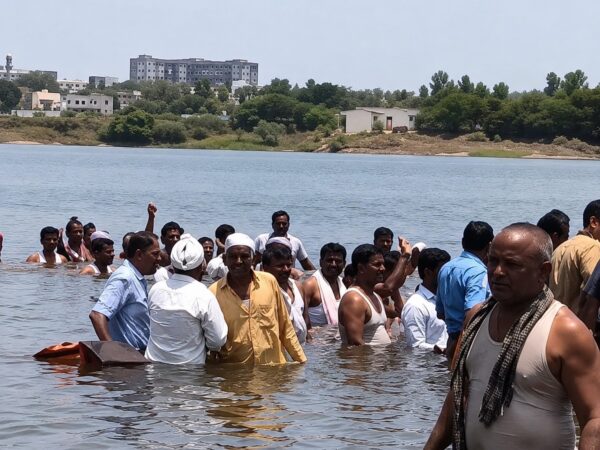
The sugarcane farmers’ agitation over unpaid sugarcane dues took a dramatic turn in Solapur on Tuesday as farmers entered the Chhatrapati Sambhaji Maharaj Lake to launch a jal samadhi protest, escalating pressure on authorities and the management of Gokul Sugar Factory.
The agitation stems from allegations that the factory has failed to clear nearly Rs 130 crore in sugarcane payments owed to farmers from Solapur and Dharashiv districts. Growers have been staging a hunger strike for the past 17 days, demanding immediate settlement of the outstanding dues, TV9 reported.

With no resolution in sight, farmers carried out their earlier warning of a jal samadhi protest. A large crowd gathered near the lake before moving towards the water body. Despite police barricades and security arrangements at the site, protesters pushed through and entered the lake, raising slogans and demanding justice for cane growers.
The incident prompted an immediate response from the administration. Senior police officers and district officials rushed to the spot and attempted to persuade the protesters to end the agitation. Some officials entered the water and held discussions with farmer representatives, but the protesters remained firm on continuing the movement until a concrete decision is taken on the pending payments.
Farmers claim that repeated efforts to secure their dues have yielded no results. Over the past several months, they have organized various demonstrations, including semi-nude protests, to draw attention to the issue. However, with the dues still unpaid, they have now intensified their campaign through the jal samadhi agitation.
The protest has put renewed focus on the financial difficulties faced by sugarcane growers waiting for payments from the Dhotra-based Gokul Sugar Factory in South Solapur taluka. As the standoff continues, pressure is mounting on both the factory management and government authorities to find a solution and clear the long-pending cane dues.
The outcome of the protest is being closely watched by farmers across the region, many of whom are facing financial strain due to delayed payments.















