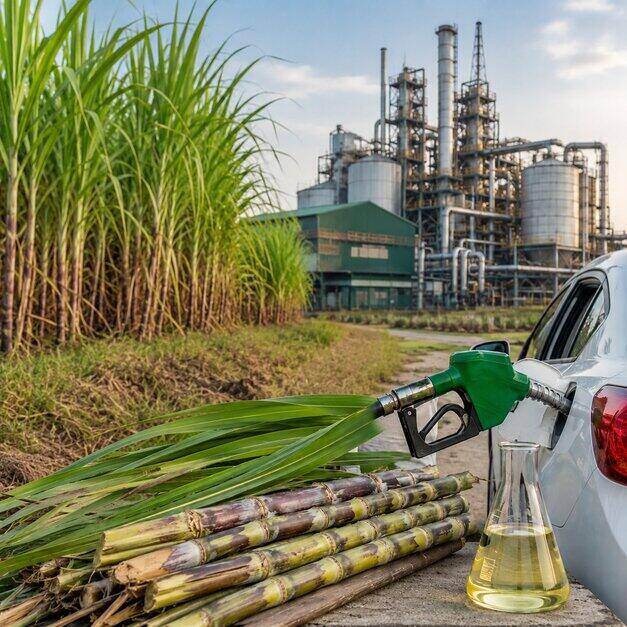
A question was asked in the Rajya Sabha during the ongoing Monsoon Session of the Parliament, whether any order, advisory or standard operating procedure has been issued by Government for upgrading the storage infrastructure at retail outlets to store ethanol-
blended petrol.
Replying to the query, MoS, MoPNG, Suresh Gopi said that the Government, under the National Policy on Biofuels, has been implementing the Ethanol Blended Petrol (EBP) Programme through Oil Marketing Companies (OMCs) in accordance with the blending targets, fuel specifications and other guidelines notified by the Government from time
to time.
Public Sector OMCs have also adopted detailed technical specifications, operating
procedures and engineering standards for the safe storage, handling and dispensing of ethanol-blended petrol in accordance with applicable Government notifications, Bureau of Indian Standards (BIS) fuel specifications and Petroleum & Explosives Safety Organisation (PESO) safety requirements.
The Ethanol Blended Petrol (EBP) Programme has been implemented through a phased,
scientifically validated and consultative process involving NITI Aayog, automobile manufacturers, Oil Marketing Companies (OMCs), Automotive Research Association of India (ARAI), Society of Indian Automobile Manufacturers (SIAM), Indian Institute of Petroleum (IIP) and other technical institutions.
Ethanol is not a new fuel. It has been used globally for over a century, with countries such as Brazil operating higher ethanol blends for decades. In India, the Ethanol Blended Petrol (EBP) Programme commenced with a pilot in 2001, E5 was introduced in 2006, and although blending remained around 1.53% in 2013-14, it has since been increased progressively in a calibrated manner after creating the necessary production capacity, infrastructure and regulatory framework.
As seen from the table, the progression has been gradual:
Ethanol Supply Year Average Blending(%)
2013-14 ~1.53
2020-21 ~8.1
2021-22 ~10
2022-23 ~12
2023-24 ~14.6
2024-25 ~19.2
2025-26 (Nov-June) 20
The Government has also considered the large-scale real-world operating experience. India
witnesses approximately 8 crore vehicles visiting retail outlets every day(around 80% petrol vehicles), Public Sector Oil Marketing Companies (OMCs) have robust systems for storage and dispensing of E20 fuel at Retail Outlets (ROs), comprising underground storage tanks, pipelines, pumps and dispensing units. These systems are designed, maintained and periodically inspected to prevent water ingress and contamination, thereby safeguarding the quality of fuel delivered to consumers.
With the progressive increase in ethanol blending levels, OMCs have undertaken appropriate modifications and technical assessments to ensure that the existing retail infrastructure is suitable for the safe storage and handling of ethanol-blended petrol. Underground storage tanks, pipelines and dispensing infrastructure have been assessed for material compatibility and operational suitability.
These assessments and field experience have not indicated any adverse chemical or
physical deterioration attributable to ethanol-blended petrol when operated in accordance with prescribed specifications and maintenance protocols. OMCs’ long-standing experience in handling ethanol at depots and installations has further supported the safe deployment of E20 across the retail network. Specific components such as gaskets, seals and other hydraulic parts are upgraded or replaced, wherever required, to maintain system reliability.
Pumps and dispensing units installed at Retail Outlets and maintained by Original Equipment Manufacturers (OEMs) have also been assessed to be suitable for dispensing ethanol-blended petrol. Upgrades in hydraulic components are undertaken wherever necessary. In line with the phased increase in blending levels, OMCs have revised procurement specifications to ensure compatibility of dispensing systems and associated equipment.
As an additional safeguard, underground storage tanks are equipped with Automatic Tank Gauging (ATG) systems that continuously monitor stock and water levels. In the event water ingress exceeds the prescribed threshold, the system automatically interlocks dispensing from the affected tank until corrective action is taken.
India has achieved 20% ethanol blending five years ahead of the original target after more than two decades of phased policy development, stakeholder consultations, scientific evaluation and capacity creation. The rollout was preceded by progressive enhancement of ethanol production capacity, retail infrastructure readiness, fuel quality standards and vehicle compatibility assessments, ensuring that the transition remained gradual, safe and scientifically validated.
Extensive laboratory studies and field trials conducted by ARAI, SIAM, IOCL, IIP and automobile manufacturers covering engine durability, drivability, cold startability, corrosion resistance, material compatibility, fuel system reliability, emissions performance and fuel efficiency have confirmed that E20 is safe for use under prescribed standards.