
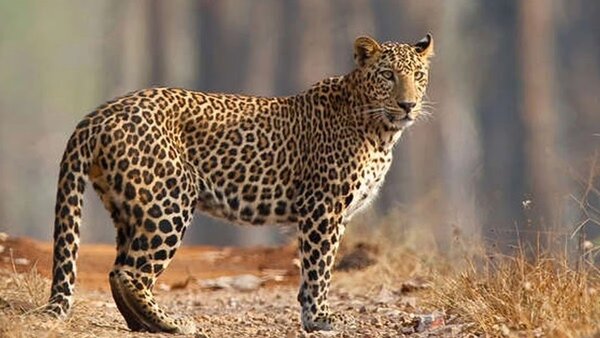
MORADABAD: More than 100 leopards are believed to be moving through sugarcane fields in parts of Uttar Pradesh’s Moradabad district, raising concern among villagers as sightings and attacks increase during the monsoon.
The Forest Department has captured two leopards within 25 hours, but officials are continuing search operations after two youths were injured in separate attacks in the Dilari area. Another leopard was captured in Thakurdwara on Tuesday morning, according to a report in Amar Ujala.

Leopard activity has been reported across Kanth, Dilari, Bhojpur and Thakurdwara, where large stretches of sugarcane provide cover for the animals.
Wildlife experts say the risk of encounters with people can increase during the monsoon. Research by the Wildlife Institute of India has found that sugarcane fields provide shelter for leopards, particularly during the monsoon and winter. Female leopards also use the fields to give birth to and raise their cubs.
Heavy rainfall can push the animals towards dry and secure locations closer to human settlements, increasing the chances of conflict, according to wildlife studies.
Following an attack on a youth in Malkapur Semli village in Dilari, the Forest Department has installed another cage to capture the leopard. Trapping operations are also under way in several villages in Thakurdwara, including Lalapur Peeplsana, Raibhud and Bahapur Balia.
More than 25 cages have been deployed across Kanth, Dilari and Thakurdwara as part of the operation. The department has also sought advice from experts associated with Anant Ambani’s Vantara wildlife project, although no response has been received so far.
The scale of the problem has prompted teams from Moradabad, Pilibhit Tiger Reserve, Bijnor, Sambhal and Rampur to join the search for leopards in sugarcane fields.
Officials face difficulties as leopard sightings and attacks are being reported from different locations while search and cordon operations are continuing elsewhere. The department has sought expert advice to formulate its next strategy.
The two captured leopards are being prepared for temporary transfer to the Etawah Lion Safari. The department has already written to the Principal Chief Conservator of Forests seeking directions on permanent relocation, but no instructions have been received.
DFO Dr Vinay Kumar said both captured animals were adult females. One is estimated to be 2.5 to three years old and the other about six years old.
The department is continuing to monitor the affected areas as it works to capture more leopards and reduce the risk to people living near the sugarcane fields.















