
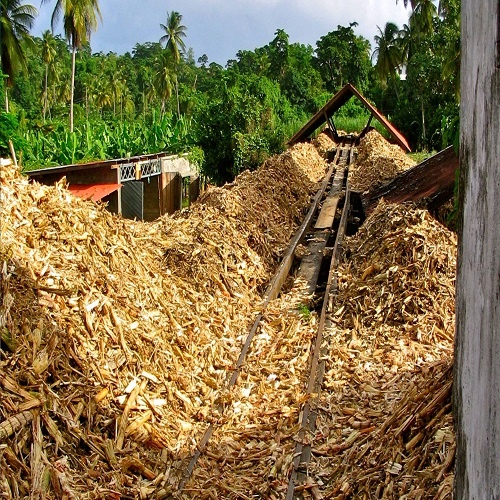
Chhatrapati Sambhajinagar: The Dharashiv district administration is examining whether bagasse and molasses from sugar factories can be used as supplementary cattle feed to provide affordable and nutritious fodder amid concerns over a shortage caused by drought conditions, The Times of India reported.
A team of district officials and senior animal husbandry experts recently visited Dhoki sugar factory to assess the possibility of converting the two sugar industry byproducts into cattle feed. The team inspected the bagasse storage areas and molasses facilities and discussed possible processing methods with factory officials.

District collector Keerthi Kiran Pujar said untreated bagasse has little nutritional value and can be difficult for cattle to digest. However, its value as feed can be improved through treatment with urea, molasses and mineral mixtures under the Urea Molasses Enriched Straw (UMES) technology.
“Raw bagasse has limited nutritional value and is difficult for cattle to digest. Its feed potential can, however, be significantly enhanced through scientific treatment using urea, molasses and mineral mixtures under Urea Molasses Enriched Straw (UMES) technology,” Pujar said.
She said molasses makes the feed more acceptable to cattle and provides energy, while urea increases its protein content. This can make treated bagasse a more nutritious feed for livestock.
The administration has asked the animal husbandry department to work with the sugar factory on a pilot project to process bagasse and molasses into cattle feed.
Officials said the proposed feed will first have to undergo scientific testing before the project can be expanded. Samples will be tested at district and divisional veterinary laboratories for their total digestible nutrients, crude protein content and toxicity levels.
“The proposed feed will undergo laboratory testing at district and divisional veterinary laboratories to assess total digestible nutrients, crude protein levels and toxicity standards. Large-scale promotion will be considered only after safety and nutritional benchmarks are met,” Pujar said.
Officials said Maharashtra has more than 200 sugar mills, which could provide a ready supply of these materials during drought years. The initiative could help tackle the recurring shortage of fodder faced by livestock owners across the state.
Drought monitoring stepped up across eight talukas
The district administration has also strengthened its drought response by appointing coordination officers for all eight talukas and starting a village-level programme to manage scarcity.
The officers from the revenue and zilla parishad departments have been asked to visit villages regularly and meet farmers, livestock owners and other residents. They have also been directed to spend at least one night every week in a drought-affected village to assess the situation, monitor local needs and ensure timely action.















