
Avalo, a North Carolina-based startup using artificial intelligence to develop climate-resilient crops, has raised $11 million in Series A funding. The company has also partnered with Coca-Cola Europacific Partners (CCEP) to improve the sustainability of its sugarcane supply chain and reduce emissions, reported AgFunerNews.
The funding round was co-led by Germin8 Ventures and Alexandria Venture Investments, with participation from CCEP, Trust Ventures, Trailhead Capital, and angel investor Will Canine. Existing investors AtOne Ventures, Better Ventures, SOSV, and Climate Capital contributed.

The investment will support Avalo’s efforts to deploy its rapid evolution platform to bring low-input, resilient crops to market. The company’s initial focus is on cotton and sugarcane varieties that can grow with less nitrogen fertilizer and less water.
CCEP’s investment in Avalo aligns with its efforts to reduce scope 3 emissions. Nicola Tongue of CCEP Ventures emphasized the significance of the partnership: “Avalo’s approach to developing sustainable crops could make a real difference in reducing emissions in our supply chain. By addressing these challenges at the source, we’re supporting a solution that benefits both farmers and the environment.”
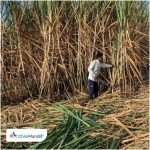
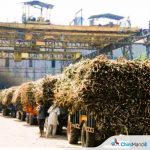
Avalo’s chief marketing officer, Nick Schwanz, told AgFunderNews that the collaboration with CCEP will center on sugarcane, a crop that requires significant water and fertilizer. He also noted that its complex genetics and long breeding cycles have made traditional breeding improvements challenging.
Avalo’s Chief Marketing Officer, Nick Schwanz, highlighted the importance of the partnership for sugarcane production: “In Australia, runoff from nitrogen fertilizer is killing the Great Barrier Reef and Australia’s $2 billion dollar sugarcane industry is facing considerable headwinds. While drought and pest pressure continue to increase, the sugar being grown has remained largely unchanged for 15 years. This is where Avalo comes in. Not only could evolved sugar varieties [that can thrive with less water and synthetic fertilizer] future proof this at-risk industry for farmers and producers, they will also prevent further damage to critically endangered ecosystems.”
He noted that while it typically takes more than 12 years to develop a new sugarcane variety, Avalo’s technology could reduce that timeline to just five or six years.
Avalo’s core technology, Gene Discovery by Informationless Perturbation (GDIP), uses artificial intelligence to identify genes responsible for key traits in crops. CEO Brendan Collins explained: “AI has transformed many industries, but what we’re doing with machine learning in genetics is cutting-edge. Unlike large language models, which rely on vast amounts of historical data, our AI can work with the limited data available for crops like sugarcane and cotton.”
Co-founder Dr. Mariano Alvarez described Avalo’s approach as a way to find meaningful genetic information in a complex biological landscape. “Most desirable agricultural traits are influenced by many genes, making them hard to improve through traditional methods. Our AI can analyze entire genomes at once, identifying which genes have the most impact.”
This AI-driven approach could significantly accelerate traditional breeding. Alvarez noted: “With conventional genome-wide association studies, only about 15-20% of identified genes turn out to be truly relevant. Our model has an accuracy rate of over 90%, meaning the traits we target are far more likely to lead to successful improvements.”
Avalo’s partnership with CCEP is a long-term project, but Collins is optimistic about the potential impact. “This isn’t something that will be solved in a year, but our technology makes progress faster and more cost-effective. By improving sugarcane’s resilience, we could also expand its growing regions and reduce environmental impact.”
Collins explained, “In the sugarcane project, we’re working on developing low-nitrogen, low-water sugarcane for Coca-Cola to help reduce their scope three emissions. This enables us to approach farmers and offer them contracts to grow this crop for a major CPG, provided they follow our agronomy guidelines and use our seeds.
“That gives us evidence to go to investors and say, we need this amount of money to develop this crop. We have this offtake guaranteed. And then by reducing the inputs that have to go into the field, we can increase sustainability and farmer profitability and get some margin for ourselves.”
He added, “We’re basically doing toll-based manufacturing. We’re giving farmers seed at a discounted rate, helping them with agronomy to grow our seed in their environments, and then harvesting with the farmer and selling the sugar at the post farm gate into the commodity supply chain, so we’re sharing the profits from their sugar, rather than selling farmers sugarcane seeds”
For more details and in-depth insights, keep reading ChiniMandi, your go-to source for the latest news on the Sugar and Allied Sectors news