Dergaon, Assam: Uruka, the eve of Bhogali Bihu that marks the post-harvest celebration in Assam, will be observed on Tuesday, with jaggery, locally known as gur, remaining one of the most important items associated with the festival, reported The Assam Tribune.
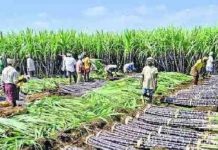
After the closure of the Baruabamun Gaon Sugar Mill, many farmers had moved away from sugarcane cultivation and shifted to tea due to the lack of a stable market. In recent years, however, efforts by the Buralikson Sugarcane Research Station at Daria in Golaghat district have encouraged farmers to return to sugarcane farming. Several cultivators have now taken up sugarcane again and are reporting improved incomes.

Sugarcane cultivation has also expanded in the Bhakat Chapori area of Majuli district, where locally produced gur has found steady demand across Upper Assam. Gur from the Missamara area holds historical importance, with records showing that an Ahom king sourced jaggery from the region for the construction of the Negheriting Siva Doul. The area later became known as Gurjogania because of this association.
The All India Coordinated Research Project (AICRP) on Sugarcane, headquartered at the ICAR–Indian Institute of Sugarcane Research in Lucknow, has been coordinating sugarcane research across the country since 1970. The programme operates through a network of ICAR institutes, state agricultural universities, government departments and non-government organisations. The project began its work at the AAU Sugarcane, Medicinal and Aromatic Plants Research Station in Buralikson in 1975.
Dr Tulsi Prasad Saikia, Chief Scientist at the Assam Agricultural University’s Sugarcane, Medicinal and Aromatic Plants Research Station in Buralikson, said the station is currently growing eight sugarcane varieties on an experimental basis over six hectares. He said the gur produced at the station has become increasingly popular, with demand exceeding current supply. The varieties under cultivation include Dhansiri, Nambar, Kolong, Kapilipar, Dayang, Borak, Lohit and Daria, while a new variety named Kakodonga is close to being released for farming.
Dr Saikia said awareness and motivation programmes have helped several farmers, including Chandan Gogoi, Suman Gogoi and Pankaj Bora from Daria, to successfully produce gur and bottled pasteurised sugarcane juice, providing them with steady earnings. He said the station is also pushing for a geographical indication tag for Missamara gur and plans to take the matter forward.
Highlighting the broader potential of sugarcane cultivation, Dr Saikia said government support is needed through a focused mission approach. He pointed to the role of low-cost, automated gur-making machines in attracting more farmers and said a proposal to set up a semi-automatic jaggery plant at the station has been submitted to Indian Oil Corporation Limited and Numaligarh Refinery Limited. He also noted that increased sugarcane cultivation could support the expansion of the Numaligarh Refinery biofuel project.
In Majuli district, residents of the flood-prone Bhakat Chapori area have increasingly turned to sugarcane farming, supporting the livelihoods of nearly 500 families. Raju Das, a local resident, said about 1,700 farmers in the district are currently engaged in sugarcane cultivation.