
Technology is revolutionising the world. It’s unthinkable to view growth across various sectors and industries without the integration of artificial intelligence, IoT and other advanced digital tools in their complex maze, to optimise efficiency and productivity.
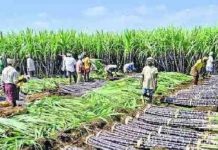
In the sugar industry as well, we see a huge role of AI and other advanced technologies playing a crucial role in improving agricultural practices, varietal development, operational practices, etc, and across the value chain- from farm- factory gate- market.

There are several sugar mills in India that have started using AI to increase efficiency and achieve better scales of production, and are enjoying the first-mover advantage.
One such pioneering industry is Triveni Engineering and Industries Ltd (TEIL), which is actively incorporating digitalisation and AI into its operations, from farm engagement programmes to internal decision-making and automation efforts.
In a conversation with ChiniMandi, the company outlined its technological endeavours, which entail a relentless pursuit of a six-pronged strategy, aimed at the development of improved planting, cultivation, crop protection and harvesting techniques. The strategy also seeks to boost the crop quality and land productivity, resulting in enhanced income in the hands of farmers.
Tarun Sawhney, Vice Chairman & Managing Director, TEIL, said that the company is advancing sugarcane farming by integrating digital intelligence into every stage of the crop cycle. It is deploying AI/ML, IoT and satellite-based tools, supported by GPS-enabled monitoring that provides farmers with real-time insights on weather, disease, and other matters.
The apex body of private sugar mills in India, ISMA, has joined the AI bandwagon with its national AI-ML initiative to scale AI use across sugarcane growing regions (Uttar Pradesh, Maharashtra, Karnataka). The mission involves connecting mill networks with digital agriculture tools. This initiative supports multiple mills indirectly.
Agriculture is a complex subject. Several factors which are not in the control of humans play a pivotal role in ensuring good produce.
The production of sugarcane is not exactly proportionate to the area under sugarcane cultivation. There are various factors, such as drought, flood, pest & disease, plant/ratoon percentage, sugar recovery, diversion of cane to jaggery, etc influence the overall sugar production.
In an interview, M Silvester, Whole Time Director, Kothari Sugars and Chemicals Ltd. and President, SISMA (TN), said that, considering the complexity of the issue, we should use modern technology, including Artificial Intelligence (AI), in addition to our traditional methods. Additional surveys may be planned wherever required to improve the data accuracy.
The Government of India is exploring AI in several spheres. Recently, the Ministry of Earth Sciences (MoES) has been exploring integrating Artificial Intelligence (AI) technologies into weather forecasting systems in addition to physics-based numerical models. This initiative is part of a broader strategy to enhance the accuracy and efficiency of meteorological predictions, which are crucial for various sectors, including agriculture, disaster management, and urban planning.
The Vasantdada Sugar Institute (VSI), a leading research body in the sugar industry, has also formed a special committee to promote the use of artificial intelligence (AI) in sugarcane farming across Maharashtra. The committee aims to build on the success of AI technology used in Baramati, where farmers reported a 30-40% increase in sugarcane yield and improved sugar recovery rates.
AI is the need of the hour for redirecting the Indian agriculture towards higher growth and higher GDP contribution. It is inseparable for the sugar industry, which is transforming itself to being an important energy producer. It has the potential to make India’s sugarcane value chain greener, more profitable and far more resilient.
On multiple occasions, government officials have called upon the sugar industry to accelerate the adoption of digitisation across the sector. The industry now needs to move decisively toward an end-to-end digital ecosystem—starting from mill operations and extending to trading and market discovery. While progress has been made in certain pockets, the adoption of AI-driven solutions remains limited, presenting a significant opportunity to enhance operational efficiency, data-driven decision-making, and transparency. Beyond production, digitisation has the potential to transform sugar trading itself through data-led and algorithm-based approaches that can improve efficiency and price discovery. As trading remains central to the industry, integrating technology into both operations and commerce is no longer optional but essential for long-term competitiveness. In this context, platforms such as Ebuysugar are actively driving the sector’s digital transition by enabling online trading, seamlessly connecting mills and buyers, leveraging data analytics for smarter transactions, and laying the foundation for AI-enabled insights across procurement, pricing, and supply chain visibility, demonstrating how technology can holistically modernise the sugar industry.
For further inquiries or to contact Uppal Shah, Editor-in-Chief, please send an email to Uppal@chinimandi.com.