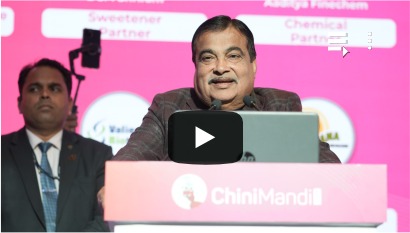

The Sugar Technologists’ Association of India (STAI) organised an All India Seminar on “Bio-CNG in Circular Economy – Challenges & Way Forward” in Kolhapur, the hub of Maharashtra’s sugar industry, on January 19. The event witnessed participation from around 150 delegates from across the country, reflecting nationwide interest in sustainable energy solutions. Eminent industry leaders and experts highlighted the growing importance of Bio-CNG as a clean fuel and underscored the pivotal role the sugar industry can play in its production and integration within a circular economy framework.
The programme was graced by respected dignitaries, including Prakash Awade, Director, Kallappanna Awade Jawahar SSSK Ltd; Sanjay Awasthi, President, STAI; Sambhaji Kadu Patil, Director General, VSI; M.G. Joshi, Managing Director, Kallappanna Awade Jawahar SSSK Ltd; Sohan Shirgaokar, President, DSTA; and others.

Speaking at the seminar, Sanjay Awasthi highlighted the importance of Bio-CNG. Referring to the theme of the seminar, he said India has immense potential due to the abundance of agricultural waste, food waste, bagasse, and other carbon-rich materials that can be converted into Bio-CNG. He noted that if India fully harnesses its renewable energy resources such as solar, wind, and Bio-CNG, the country’s dependence on conventional fuels could be reduced, though he acknowledged this would require sustained long-term efforts.
Emphasising the role of the sugar industry, Awasthi said it is well-positioned to take the lead in Bio-CNG production through the utilisation of press mud and other feedstocks.
He further noted that several large companies are planning to set up Bio-CNG plants and cited examples from European countries such as Switzerland, where Bio-CNG plants are commonly found every 10–20 kilometres. Even nations with cold winters, he said, are increasingly relying on Bio-CNG to meet local energy needs.
Awasthi suggested that every sugar factory should consider setting up a Bio-CNG plant, as it would not only create an additional revenue stream but also contribute to national energy security.
M.G. Joshi noted that the sugar industry is uniquely positioned to lead in CBG production due to the availability of feedstock such as bagasse, press mud, and spent wash. He said the sugar industry has significant opportunities for CBG production and highlighted that the government is supporting such initiatives.
Sambhaji Kadu Patil, Director General, VSI, highlighted the need for the sugar industry to diversify and adopt a bio-refinery approach amid ongoing challenges. He noted that sugar mills face difficulties, with raw material and product prices controlled by the government, and reduced crushing days despite increased daily capacities.
He stressed that the bio-circular economy model offers a sustainable solution. By converting by-products such as press mud cake, spent wash, and bagasse into CBG, fermented organic manure, and other value-added products, sugar mills can optimize resources without affecting sugar production. Patil emphasized that embracing a circular bio-economy and bio-refinery model will not only strengthen the sugar industry’s sustainability but also contribute to energy self-reliance, environmental protection, and farmer prosperity.
Prakash Awade, Director, Kallappanna Awade Jawahar SSSK Ltd, emphasised the importance of storage for Bio-CNG production and urged the industry to focus on storage solutions. He encouraged the sector to work on a long-term plan to ensure viability.
The seminar also featured technical presentations by eminent experts from industry, academia, and leading technology providers and consultants, offering a comprehensive perspective on the Bio-CNG ecosystem and its future roadmap.