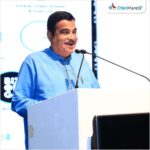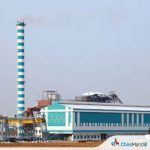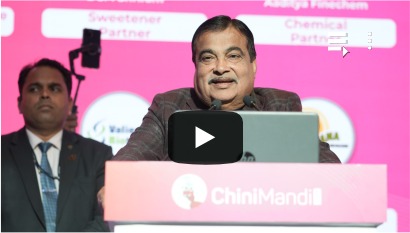

Pune: Union Minister for Road Transport and Highways Nitin Gadkari on Friday urged sugar factories to gradually move away from co-generation power projects and focus on producing compressed biogas (CBG), saying the future demand for such electricity may decline as it becomes costlier than other renewable energy sources.
Speaking at the inauguration of the two-day Compressed Biogas (CBG) Conference 2026 organised by the Indian Federation of Green Energy at YASHADA in Pune, Gadkari said the rapid expansion of solar power has made electricity generated from sugar mills comparatively expensive.

He said that once existing power purchase agreements expire, sugar mills could face difficulties in selling electricity produced through co-generation. As a result, factories should begin shifting towards compressed biogas production in time to avoid future challenges.
According to the minister, green fuels such as CBG can not only help protect the environment but also strengthen the rural economy by creating more opportunities for farmers and generating employment.
“The Centre aims to expand the green energy sector so that agriculture-led growth can benefit farmers and create more jobs,” Gadkari said.
The conference was attended by several leaders from the bioenergy and sugar industries, including Pramod Chaudhari, president of the Indian Federation of Green Energy Annasaheb Patil, senior vice-president Y. B. Ramakrishna, Member of Parliament Dr. T. Krishna Prasad, managing director of Verbio India Ashish Kumar and co-chairman of the IFGE Sugar Bioenergy Forum Dilip Patil.
Speaking at the event, Praj Industries chairman Pramod Chaudhari said compressed biogas is expected to play a significant role in the country’s future energy mix. He said the technology allows energy production from agricultural waste materials that would otherwise go unused.
Chaudhari also suggested that modern technologies such as artificial intelligence should be introduced in the sector. He said sugar mills should work towards becoming integrated bio-refineries and aim to emerge as global exporters of bio-energy products.
Gadkari also highlighted the country’s heavy dependence on energy imports. He said India imports nearly 86 percent of its energy needs, which costs around Rs 22 lakh crore annually. According to him, several vested interests are linked to energy imports and may resist the rapid growth of domestic energy production.
However, the minister said he would continue to push for the development of local energy sources and work towards strengthening the country’s energy self-reliance.