The sugar industry has been demanding an increase in the Minimum Selling Price (MSP) of sugar to cover the rising cost of sugar production in the country.
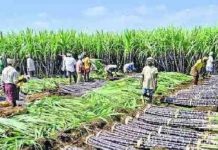
For the 2025–26 sugar season, the Central Government increased the Fair and Remunerative Price (FRP) of sugarcane to Rs 355 per quintal, while Uttar Pradesh, a major sugarcane-producing state, raised the State Advised Price (SAP) by Rs 30 per quintal.

This will translate into a higher payout to farmers by sugar mills, as mills are expected to crush a larger quantity of sugarcane due to increased production.
According to the Indian Sugar & Bio-Energy Manufacturers Association (ISMA), the recent surge in sugarcane costs across Uttar Pradesh, Karnataka, Punjab, Haryana, and Uttarakhand has pushed the pan-India average cost of sugar production to Rs 41.72 per kilogram, while the MSP remains stagnant at Rs 31 per kilogram.
The widening gap between cash outgo and income, coupled with stagnant ethanol procurement prices and reduced ethanol allocation to molasses-based distilleries, has become a major concern for sugar mills, according to the sugar industry.
Speaking to ChiniMandi, Jatin Kothari, Senior Executive Officer, The Ugar Sugar Works Ltd., said that one of the primary reasons for advocating an increase in MSP of sugar is the sharp escalation in production costs over the past few years. Sugar mills are facing sustained increases in key input costs.
“In several major sugar-producing states, the actual cost of production of sugar has already exceeded the prevailing market prices. This growing mismatch between costs and realisations has severely eroded mill margins. As a result, sugar mills are under acute financial stress, facing liquidity constraints and cash-flow challenges,” he added.
Kothari added that revising the sugar MSP would provide immediate financial relief to the industry by improving realisations and cash flows. This, in turn, would enable mills to operate efficiently and ensure timely payment to the farmers, strengthening rural incomes, reducing dependence on short-term borrowings and improving creditworthiness.
“More importantly, a rationalised MSP will play a critical role in supporting the Government’s flagship energy transition and bio-economy initiatives. Improved financial stability will allow sugar mills to invest confidently in future-oriented growth areas, including ethanol expansion to support energy security, Compressed Bio-Gas (CBG) projects aligned with waste-to-wealth and circular economy objectives, Sustainable Aviation Fuel (SAF) as a next-generation clean fuel, and PDM and other value-added bio-products,” Kothari stated.
He said that these investments require significant capital outlay, long gestation periods, and strong balance sheets, which are difficult to achieve under suppressed sugar realisations.
Kothari said, “The Ugar Sugar Works Ltd. is advocating the industry’s demand for converting sugar mills into Energy Hubs. This will increase the ethanol demand structurally and eliminate the intermediaries.”
“If sugar mills become energy hubs, the direct ethanol and other green fuel dispensation will improve margins of the sugar mills on account of improved per tonne revenue of sugarcane. This will reduce the transportation bottlenecks and help achieve zero-waste economics. From the economic point of view, rural jobs and economy will get a big impetus, which will make it self-reliant,” he concluded.