
Jalandhar: While farmers across India continue to demand a Minimum Support Price (MSP) to ensure a guaranteed market for their crops, a farmer in Jalandhar has created his own dependable market through organic farming, reports The Indian Express.
Amarjit Singh Bhangu, 54, from Charke village, has fully converted his 17-acre farm to organic cultivation and built a strong consumer base that now spans across Punjab. His products—mainly jaggery, shakkar (jaggery powder) and turmeric—are already booked until March 2027, and the demand still exceeds his supply.

At a time when many farmers are selling their land to cover basic expenses, Amarjit has expanded his family’s landholding from 12 acres to 17 acres solely through income from farming.
After spending six years in Abu Dhabi in the 1990s, Amarjit returned home for good. “I had seen enough of the world. My father needed me, and farming needed attention, so I stayed,” he said. His father, Avtar Singh Bhangu, encouraged the shift to organic farming. Following the death of Amarjit’s cousin due to blood cancer in 2004, Avtar set up a vermicompost unit.
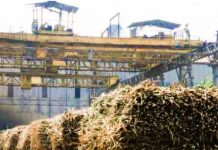
The family began organic farming on 2.5 acres in 2006 and expanded it to all 12 acres by 2012, switching entirely from wheat and paddy to sugarcane.
However, the first few years were challenging. “There was no social media then. We used to carry a few pieces of jaggery to local shops as samples. Most jaggery curdles tea, so we wanted shopkeepers to see that ours was pure. It wouldn’t split when boiled with milk,” he said. Shopkeepers would then sell small quantities to consumers, slowly spreading the word.
Over time, consumer-to-consumer recommendations built a steady customer base. Products were sold directly from the farm, and while some seasons brought profit and others did not, the family continued refining their work.
“We stayed committed and began making flavoured jaggery, shakkar and jaggery candy using an electric crusher,” Amarjit said. The crusher can handle 200 quintals but is used for around 60 quintals a day during the jaggery season, from mid-November to March. They sell jaggery at ₹130 per kg, shakkar at ₹150 per kg and jaggery candy at ₹270 per kg.
“Our strength is local families, not bulk buyers. People from Canada often ask for large supplies, but we don’t take those orders,” he said.
Local customers book products months in advance—mostly during February and March for year-long storage. “We never take advance payment. If someone cancels, it’s fine. There is always a long waiting list,” Amarjit said.
One acre of sugarcane yields 200–250 quintals depending on the variety, producing 25–30 quintals of jaggery or shakkar. This brings in ₹3.5–3.9 lakh per acre, with more than half as profit. In comparison, selling sugarcane to mills at the State Assured Price yields around ₹1.6 lakh per acre. “Why run after SAP when you can create your own market through quality?” he said.
He grows cane varieties such as COJ 85, COJ 118 and 15023, and also supplies seed material.
Of the five acres he purchased between 2015 and 2024, two are dedicated to turmeric and the rest to fodder, basmati and dairy and poultry activities—all organic. Sugarcane and turmeric are year-long crops. Turmeric is sown between late March and mid-May using mulching, harvested in January, and then peeled, dried and kept in cold storage to preserve quality. It is later ground into powder and sold at ₹400 per kg. The crop can generate ₹6–7 lakh per acre, again with over half as profit. Amarjit employs 15 permanent workers, creating steady rural employment.
“We keep prices reasonable so that more people can buy pure food,” he said.
Amarjit has received several honours, including two State Awards for Organic Farming from former Punjab Chief Ministers, an award from Punjab Agricultural University, and multiple recognitions at the district level.
He also runs a fully automatic poultry unit that began with 300 birds in the late 1990s and now houses 50,000 birds. He and his younger brother Karamjit Singh manage all farming, processing and poultry operations together.
Amarjit speaks proudly of his parents. “They lived in the village all their lives but were very forward-thinking. They gave us the same values,” he said. After his father passed away in 2017, the family fulfilled his wish by donating his body to the Punjab Institute of Medical Sciences (PIMS) in Jalandhar for medical research. They did the same when his mother Gurmeet Kaur died in 2022.
“We don’t just sell food,” Amarjit said. “We want people to know what they should eat and what they shouldn’t. When consumers demand quality, producers will have no choice but to grow it.”