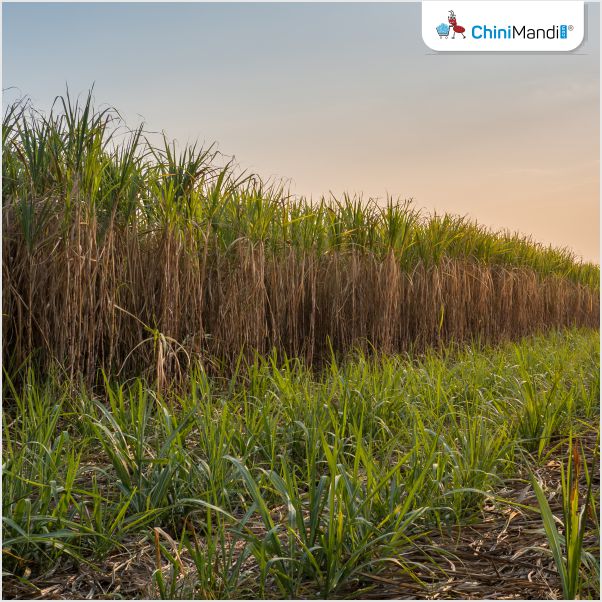
Kolhapur: Farmers in -growing areas are increasingly worried as flowering in standing crops is leading to lower cane weight and reduced sugar recovery, adding to their financial stress, reported The Times of India.
Sugarcane crushing for Maharashtra’s 2025–26 season has picked up pace, with operations expanding steadily across the state. As per the latest data from the Sugar Commissionerate, 184 sugar mills started sugarcane crushing as of December 21, 2025.

So far, mills in the state have crushed 446.04 lakh metric tonnes (LMT) of sugarcane, producing 380.21 lakh quintals of sugar. The average sugar recovery rate currently stands at 8.52%.
As per the news report by The Times of India, Atul Save, a sugarcane farmer from Kuditre, said crops that survived excess rainfall, cloudy conditions, floods, and pest attacks are now facing losses due to flowering. He said the stalks tend to break and lose weight, which directly affects farmers’ earnings. Save added that farmers have urged sugar factories to begin harvesting early, as flowering cane continues to lose both weight and sugar content the longer it remains in the field.
Experts from the sugar industry said the unusually high level of flowering this year is linked to frequent weather changes, unseasonal rains that continued until late November, and delays in the start of the crushing season, as per ToI report.
Sachin Patil, secretary of the Vishwasrao Naik Sugar Factory in Shirala, Sangli district, explained that flowering marks the stage when sugarcane growth stops and the crop gradually becomes hollow. He said rainfall that began in mid-May and lasted until November delayed harvesting, especially since sugarcane takes 12 to 16 months to mature depending on the variety. Patil said flowering could cause farmers to lose around five per cent of their yield, according to the news report by ToI.
Dr Ashokrao Pisal, associate dean at Rajarshi Shahu Maharaj Agricultural College in Kolhapur, said that when mature sugarcane remains in the field for more than one and a half to two months, the stalks begin to burst and turn hollow. He said the sugar inside starts breaking down into simpler forms, which reduces the amount of sugar that can be extracted.