
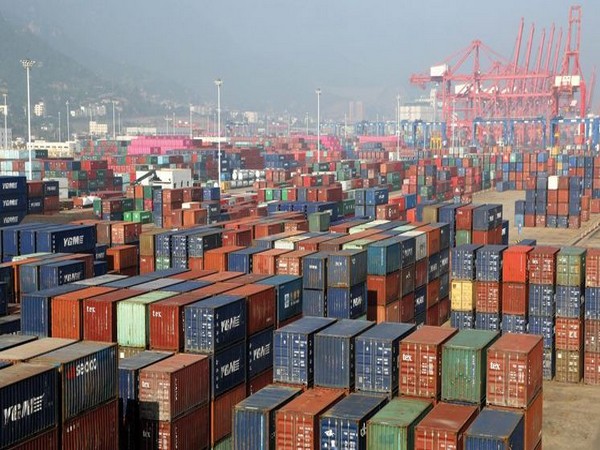
The rapid escalation of tensions after U.S. and Israeli strikes on Iran has disrupted global trade routes, bringing major air and sea corridors in the Middle East to a near standstill. The crisis has caused widespread delays in cargo movement and forced airlines and shipping companies to suspend operations across the region, Port Calls reported.
Airspace closures over Iran, Iraq, Jordan, Israel, and several Gulf nations, including the United Arab Emirates, Qatar, and Kuwait, have severely affected passenger and freight services.

Major airports, including Dubai International Airport, Abu Dhabi airport, and Doha airport, temporarily halted operations following retaliatory strikes. Limited services have since resumed as authorities work to clear backlogs of stranded passengers.
Several airlines have issued advisories. Cargo divisions such as Emirates SkyCargo and Qatar Airways Cargo have restricted new bookings. Other carriers, including Lufthansa, Air France, and British Airways, have suspended services to the region until at least mid-March. Some Asian airlines have also canceled or diverted flights to Gulf destinations due to safety concerns.
The shipping situation has become equally critical in the Strait of Hormuz, a key global oil route. Reports indicate that more than 700 vessels are waiting in nearby waters as tensions rise and warnings were issued about tanker movement through the passage.
Major global container operators — including Mediterranean Shipping Company, Maersk, CMA CGM, and Hapag-Lloyd — have suspended transits through the strait and parts of the Red Sea. Some companies have also paused new bookings for cargo heading to the region.
Many vessels are now being rerouted around Africa’s Cape of Good Hope, adding 10 to 14 days to delivery times. In response, shipping providers have introduced war-risk surcharges ranging from $1,500 to $4,000 per container.
The International Transport Workers’ Federation and the Joint Negotiating Group have declared the Strait of Hormuz and surrounding waters a high-risk area. The decision activates additional safety measures for seafarers and allows them to refuse to sail into the zone.
The federation stressed that seafarers are civilian workers and should not be exposed to military danger, saying their safety must take priority over commercial interests.
In the Philippines, importers and exporters are preparing for higher costs and delays. Freight companies and airport operators have warned of rising shipping rates and longer delivery times as global routes remain unstable.
Logistics provider FedEx has suspended pickup and delivery services in several Gulf countries, including Bahrain, Kuwait, Iraq, Qatar, and the United Arab Emirates, citing safety concerns. The company said shipments across the region may face extended transit times.
As of March 3, the conflict has continued to widen, with reports of further military action in the region and ongoing exchanges of strikes, deepening uncertainty for global trade and transport networks.