India today stands at a critical juncture in its energy security strategy. Global geopolitical uncertainties, particularly the continuing instability in the Middle East and rising tensions such as the emerging U.S.–Iran conflict, remind us that dependence on imported crude oil is a strategic vulnerability. In such a volatile global environment, the possibility of disruptions in petroleum supply cannot be ruled out. In extreme circumstances, nations dependent on imported fuel could even face the prospect of rationing of petroleum products.
At this time, India must recognize that its ethanol production capacity is not an industrial excess—it is a national asset.

Ethanol: India’s Most Practical Alternative to Petrol
Among all renewable fuel options, ethanol stands out as the most viable and immediately scalable substitute for petrol. The Government of India has already demonstrated remarkable progress through the Ethanol Blended Petrol (EBP) Programme. The rapid success of E20 blending within a relatively short period has proven that India possesses both the technical capability and the agricultural resources to support higher ethanol blending levels.
The benefits of ethanol extend far beyond fuel substitution. Ethanol serves as a powerful tool for:
- Reducing India’s dependence on imported crude oil
- Saving precious foreign exchange
- Strengthening the rural economy
- Enhancing farmers’ income
- Creating a stable domestic market for agricultural produce
Every litre of ethanol blended into petrol represents foreign exchange saved and income transferred directly into the rural economy. Instead of paying billions of dollars to oil-exporting nations, the same money circulates within India—benefiting farmers, rural industries and ultimately national economy.
Ethanol and Rural Economic Transformation
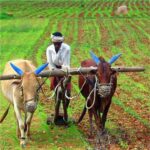
India’s ethanol ecosystem is deeply connected with agriculture. Feedstocks such as maize, damaged food grains, and sugarcane provide reliable raw materials for ethanol production. This linkage ensures that ethanol policy directly supports farmers and rural livelihoods.
The ethanol industry has already become a major driver of agricultural demand, ensuring remunerative prices and market stability for farmers. When ethanol production expands, rural prosperity expands with it.
Overcapacity: A Strategic Reserve, Not a Problem
Today, India has installed ethanol production capacity of approximately 1800 crore litres. Some observers have incorrectly labeled this as “overcapacity.” In reality, this capacity is a strategic buffer that strengthens India’s ability to rapidly increase blending levels when required.
At present, grain and sugar-based feedstocks are available in surplus, ensuring that this installed capacity can be effectively utilised. Instead of viewing this capacity as excessive, policymakers should recognise it as a national preparedness mechanism, especially in a world where energy supply chains are increasingly uncertain.
Misleading Narratives Against Ethanol Blending
In the past few months, certain narratives questioning E20 petrol have emerged. Many of these concerns lack credible technical backing and often originate from external interests that prefer India to remain dependent on imported petroleum.
The experience so far has clearly demonstrated that E20 blending is safe, practical, and beneficial for India’s economy and environment. India should not allow unfounded concerns to slow down its progress toward energy self-reliance.
Time to Move Beyond E20
The Government of India, under the leadership of Prime Minister Sh. Narendra Modi Ji, deserves appreciation for successfully implementing the E20 program. However, India should not pause at this milestone based on misleading narratives against Ethanol blending.
Given the existing ethanol production capacity and availability of feedstock, the country should move forward on a fast-track roadmap toward higher blending levels such as E27 or any level technically accepted by vehicle manufacturers.
Higher blending levels will further:
- Reduce crude oil imports
- Improve energy security
- Strengthen rural income
- Lower carbon emissions
Policy Measures to Accelerate Ethanol Adoption
To fully realise the potential of ethanol as a strategic fuel, the Government of India may consider the following policy measures:
- Promote Flex-Fuel Vehicles (FFVs)
Flex-fuel vehicles capable of operating on higher ethanol blends should be promoted through concessional taxation and supportive regulatory policies. This will enable consumers to use higher blends of domestically produced ethanol. - Develop Ethanol Dispensing Infrastructure
India must begin building dedicated ethanol dispensing infrastructure at fuel stations. This will enable consumers to access higher ethanol blends conveniently. - Rationalise Taxation for Ethanol Fuel
Ethanol dispensed separately should attract only GST without additional state taxes. This would make ethanol competitively priced and attractive to consumers.
A Vision for Energy Independence
If India moves decisively in this direction, it is entirely possible for the country to replace up to 50% of petrol consumption with domestically produced ethanol in the coming years.
Such a transition would represent one of the most significant economic transformations in modern India:
- Massive foreign exchange savings
- Significant reduction in crude oil imports
- Higher farmer incomes
- Accelerated rural development
- Strengthened energy security
Conclusion
At a time when much of the world is engulfed in geopolitical hostility and uncertainty, energy self-reliance is no longer an option—it is a necessity.
India already possesses the agricultural strength, industrial capacity, and policy vision required to lead the global transition toward biofuels. The country’s ethanol capacity should therefore be viewed not as surplus, but as a strategic national asset ready to secure India’s energy future.
The moment calls for bold policy decisions. By moving beyond E20 and embracing higher ethanol blending levels, India can take a decisive step toward energy independence, rural prosperity, and economic resilience.
The author is the President of Grain Ethanol Manufacturers Association (GEMA).