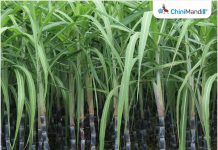
Sugar mills across Punjab are grappling with a shortage of sugarcane in the current crushing season after floods damaged large areas of the crop and reduced overall yields. The supply gap has prompted private mill owners and their teams to directly approach farmers in an effort to secure sufficient cane for operations, MSN reported.
State Cane Commissioner Amrik Singh confirmed the issue, explaining that mill capacities have expanded in recent years, but cultivation has not kept pace. He emphasized that increasing the area under sugarcane is essential to support the higher processing capacity.

Last season began with sugarcane planted on nearly 95,000 hectares (2.35 lakh acres). Flooding affected close to 40,000 acres, while production on the remaining land declined sharply, with yields falling by about 40 to 50 quintals per acre. The usual output of around 340 quintals per acre has slipped to nearly 300 quintals this season, he said.
Punjab typically produces about 780 lakh quintals of sugarcane each year, of which roughly 630 lakh quintals are supplied to mills. Private mills handle about 470 lakh quintals, while cooperative mills process the remainder.
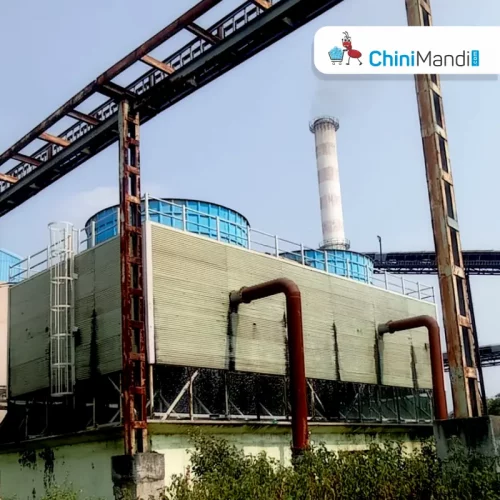
The state operates 15 sugar mills—nine in the cooperative sector and six privately run. Cooperative units are located in Gurdaspur, Batala, Ajnala, Bhogpur, Nakodar, Nawanshahr, Budewal, Morinda, and Fazilka, while private mills operate in Khanna, Buttar Seviyan, Kiri Afgana, Mukerian, Dasuya, and Phagwara. Cooperatives crush about 30% of the total cane, with private mills accounting for the larger share.
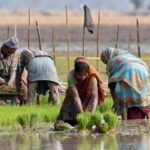
Authorities have begun fresh transplantation and are aiming to expand the sugarcane area by an additional 30,000 to 40,000 acres to improve future supply.
Rana Inder Partap Singh, owner of a private mill in Buttar Seviyan, said delayed harvesting due to a labour shortage has compounded the problem. He urged the state to adopt mechanised harvesting, arguing that dependence on manual labour remains a major weakness.
According to him, labour represents nearly a quarter of total crop expenses, and mechanisation could reduce costs by 10–12%. He also called for a three-year plan to promote mechanisation, noting that fewer seasonal workers from Uttar Pradesh and Bihar are arriving in Punjab for the harvest.