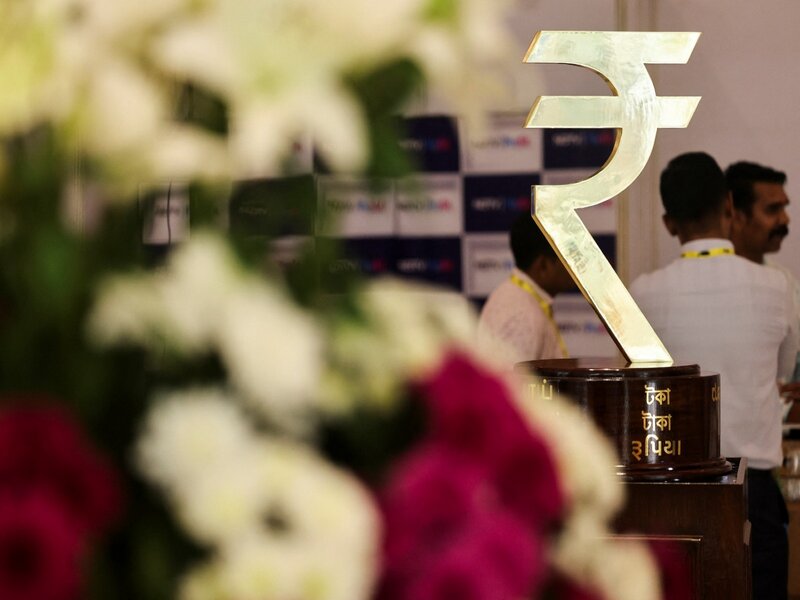
New Delhi [India]: The recent depreciation of the Indian rupee has reignited debate on whether a weaker currency genuinely enhances India’s export competitiveness.
A new report by Systematix Research says that currency depreciation delivers uneven outcomes across sectors and, in many cases, worsens the trade balance rather than improving it

According to the report, sectors such as electronics, chemicals, machinery and petroleum products do see an apparent export benefit from a weaker rupee. However, this advantage is significantly diluted due to their heavy dependence on imported inputs.
The study noted, “Currency depreciation is positive for exports of electronics, chemicals, machinery and petroleum products. But high dependency on imports leads to increase in import cost, thereby offsetting gains and widening the trade deficit.”
With raw material import intensity in manufacturing at around one-third, higher input costs erode export competitiveness and inflate the overall import bill.
In contrast, the report identified food and agro-based exports as the only segment that consistently benefits from rupee depreciation. Owing to low import intensity, this sector not only records higher exports but also a tangible improvement in trade balance.
The report highlighted that “Food and agro-based exports are the only sector where the currency depreciation is correlated with both an increase in exports and an improvement in trade balance, due to low import intensity.”
This structural advantage allows currency weakness to translate directly into net external gains for the sector.
The findings are particularly adverse for labour-intensive sectors, which are often assumed to benefit most from a weaker currency. Contrary to popular belief, the report concludes that rupee depreciation has a negative impact on textiles and leather.
The report explicitly stated, “While for the labour-intensive sectors like textiles and leather, currency depreciation leads to a negative impact on the sector.”
Rising costs of imported intermediates, combined with weak global demand, undermine pricing power and profitability in these segments.
More broadly, the report cautioned that any positive impact of rupee depreciation on exports can be neutralised by deteriorating global conditions. It observes that slowing global growth, rising protectionism and costlier imported inputs together overwhelm currency-led competitiveness gains.
The study highlighted that “Positive impact of rupee depreciation on exports can be negated by slower global growth, induced by rising protectionism and increase in cost of imported inputs.”
As a result, several export-oriented sectors face structural stress despite currency weakness.
The report emphasized that sectors such as textiles, gems and jewellery, and leather are among the worst affected under these conditions. It notes that “Sectors like Textile, Gems & Jewellery and Leather & related are decisively adversely impacted by currency depreciation,” reflecting their high sensitivity to both global demand shocks and imported input costs.
Overall, the report argues that rupee depreciation is not a reliable policy lever for improving India’s trade balance. With high import dependence and rising global protectionism, the benefits of a weaker currency remain limited and, in many cases, counterproductive. (ANI)