Spray Engineering Devices Ltd. (SEDL), a leading Indian clean-tech engineering company specializing in thermal heat recovery, biomass valorisation, and advanced water treatment, has unveiled new insights into how its solutions are enabling industries to achieve water self-sufficiency while turning waste into value.
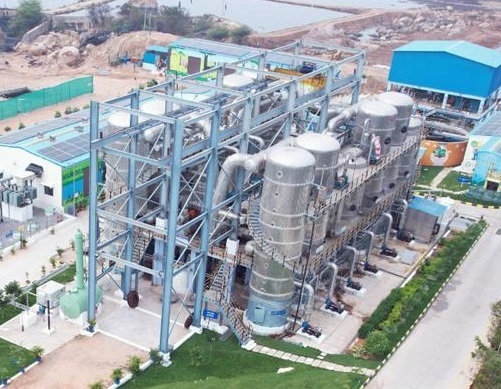
At the core of this is SEDL’s patented MVR (Mechanical Vapour Recompression)-based Low Temperature Evaporation (LTE®) technology to achieve Zero Liquid Discharge (ZLD), caustic recovery, and product concentration systems. These solutions are proving transformative for the textile, chemical, pharmaceutical, dye, brewery, beverage, distillery, and other sectors, where industries are under mounting pressure to reduce freshwater dependence, cut carbon emissions, and meet stringent sustainability regulations.
Unlike conventional steam-based evaporators that consume high energy and drive-up costs, SEDL’s LTE® technology based on MVR to achieve ZLD recycles heat within the process to achieve maximum utilization. It enables up to 99% clean water recovery at 1/4th the operational cost of conventional systems. Energy consumption is also significantly lower at 10–25 kWh/m³, cutting both carbon emissions and operational costs, and reducing sludge generation. The process yields a dry by-product with less than 10% moisture, which can be repurposed into value-added products for reuse across sectors, or sent to the TSDF facility for safe disposal depending on the nature of the feed.
Mr. Vimarsh Verma, Director–Operations and Head of Water & Novel Applications at SEDL, commented, “India’s water challenge is not just about treatment – it is about enabling industries and cities to reclaim, recycle, and reuse water at scale. Through our MVR-based LTE® to achieve ZLD and resource recovery systems, we are helping industries achieve water self-sufficiency while creating new revenue streams from by-products. This makes our approach both sustainable and profitable.”
SEDL’s technologies are already delivering measurable results. In electroplating, Hero Cycles (Ludhiana) achieved 91% water recovery with a power use of just 20–25 kWh/m³, producing water clean enough for reuse (TDS < 250 ppm). In textiles, Garg Acrylics Ltd. (Ludhiana) and Indorama India Pvt. Ltd. (Baddi) reached 97–99% recovery with significantly lower operational costs compared to steam-based systems, while reducing TDS levels to 50–150 ppm. In pharma and dyes, SEDL’s systems are helping industries meet stringent regulatory norms while reducing effluent loads. In distilleries, high-strength effluents like spentwash are being treated efficiently, allowing both water reuse and by-product valorisation. In breweries and the beverage industry, RO reject is being treated efficiently, and the recovered clean water is reused in the process – reducing groundwater dependency.
SEDL’s ZLD and water recovery systems also align with India’s national priorities. They directly support the objectives of the Jal Shakti Abhiyan by promoting large-scale water conservation and reuse, and the Make in India mission by ensuring reliable water availability for manufacturing growth. In the ethanol blending program, where distilleries generate large volumes of wastewater (vinasse), SEDL’s systems enable near-total recovery and reuse, reinforcing the government’s waste-to-wealth vision.
With recognition including the National Energy Efficiency Innovation Award (2021) and the CII-National Award for Excellence in Water Management (2019), along with a granted Indian patent and DSIR accreditation, SEDL continues to demonstrate that water sustainability and industrial profitability can go hand in hand.