Tamil Nadu Agricultural University (TNAU) has secured a 20-year patent from the Patent Office, Government of India for a newly developed sugarcane single-bud sett cutter aimed at improving planting efficiency and reducing costs for farmers, The Covai Mail reported.
The machine, powered by a 4-horsepower diesel engine, is designed to cut sugarcane stalks into single-bud setts quickly and uniformly. Built on a sturdy mild steel frame, it includes a power transmission system, serrated cutting discs, protective covers, a cane holder for easy feeding, a delivery chute, a counter to record output, vibration control mounts, and wheels for mobility.

University officials said the cutting mechanism operates at 2,200 rpm with a 200 mm cutting disc. Farmers can adjust the spacing between the cutting discs to produce setts of 30 mm, 35 mm, or 40 mm in size. The machine is capable of cutting around 1,700 buds per hour.
According to the university, the operational cost of using the machine is about Rs 1,000 per hectare, significantly lower than the Rs 6,250 per hectare typically incurred through conventional bud chipping methods. This results in savings of more than 50 per cent in both time and cost. TNAU also noted that the equipment reduces physical strain on agricultural labourers.
Field trials recorded a germination rate of 95 per cent under nursery conditions and 90 per cent under field conditions. The machine is priced at Rs 34,000 and has dimensions of 1,270 mm in length, 510 mm in width, and 1,130 mm in height.
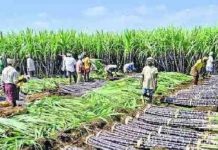
India has the second-largest area under sugarcane cultivation after Brazil, covering about 4.7 million hectares with an average productivity of 72 tonnes per hectare. Tamil Nadu leads the country in sugarcane productivity, with average yields exceeding 100 tonnes per hectare.
The university said the new cutter supports the Sustainable Sugarcane Initiative, which promotes the use of single-bud chips to ensure uniform crop growth and higher output. Traditional manual bud chipping methods are often slower and less efficient, highlighting the need for mechanised solutions in the sector.