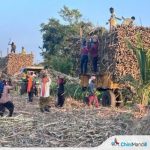
Pasighat: The College of Agriculture, Pasighat, organised a ten-day vocational training programme on “Sugarcane Production Technology and Its Value Addition” at Ngopok village in Arunachal Pradesh to strengthen farmers’ skills in scientific cultivation and value addition. The programme trained 30 farmers and aimed to improve their technical knowledge and practical abilities, reported Arunachal24.in.
The initiative was supported by the ICAR–Indian Sugarcane Research Institute, Lucknow, under the North Eastern Hill (NEH) component, as part of ongoing efforts to support sugarcane-based livelihoods in the region.

The programme began with an inaugural session led by Dr. Gireesh Chand, organising secretary of the training, who spoke about the strong potential for sugarcane cultivation in Arunachal Pradesh’s northeastern region. He pointed to favourable weather conditions and fertile land, while stressing the importance of adopting improved production methods and value addition to increase farm income and encourage sustainable rural growth.
Dr. Sanjay Swami, Dean of the College of Agriculture at Central Agricultural University, Pasighat, highlighted the role of sugarcane in supporting the rural economy. He said the crop helps generate livelihoods and creates employment through processing and products such as jaggery, sugarcane juice and other by-products.
The programme included several technical sessions. Dr. Pavankumar Goudar discussed land preparation and planting techniques, covering both traditional and mechanised methods, improved spacing, seed selection and the use of machinery to boost productivity while lowering labour costs.
Dr. Hari Kesh spoke about the importance of hybrid varieties in improving yield and quality, emphasising the need to choose high-yielding and disease-resistant crops suited to the region. Plant protection was addressed by Dr. N. Y. Chanu, who outlined major insect pests affecting sugarcane in the Northeast and explained pest control measures to reduce crop losses.