
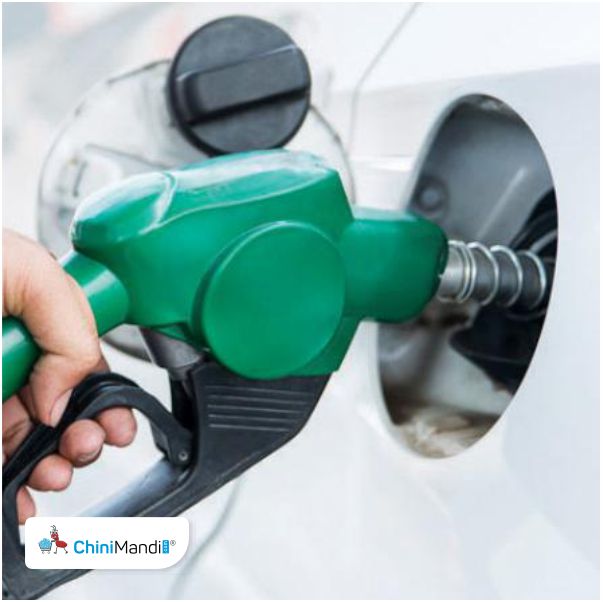
Maruti Suzuki is expected to launch a flex-fuel vehicle capable of running on up to 100 per cent ethanol at a special programme in Delhi on June 5, 2026, Union Minister for Road Transport and Highways Nitin Gadkari announced on Saturday, RushLane reported.
Gadkari made the announcement while addressing the 19th Rozgar Mela in Nagpur, where he reiterated the government’s push toward greener fuels and a reduction in India’s dependence on crude oil imports. The minister said the launch of such a vehicle would deliver cost-effective, pollution-free, and indigenous fuel production and supply to Indian consumers.

According to the report, the Maruti Suzuki vehicle would be the first four-wheeler flex-fuel model to go on sale in India, equipped with specially designed fuel storage, delivery, and ignition systems to handle high ethanol concentrations including blends up to E100 (100 per cent Ethanol). Suzuki had showcased a flex-fuel variant of its Fronx sub-four-metre SUV at the Japan Mobility Show 2025 in Tokyo, though that prototype was capable of running on blends only up to E85 (85 per cent ethanol). RushLane noted that the E100-capable vehicle to be launched on Environment Day may be based on a different model, given the additional engineering requirements that higher ethanol concentrations demand.
Gadkari said around 12 companies – including Toyota, Tata Motors, Mahindra and Mahindra, and Maruti Suzuki – had already showcased flex-fuel vehicles, and that ethanol-powered two-wheelers from Honda and Suzuki had also arrived in the market.
The minister underlined the broader energy security rationale, noting that 87 per cent of India’s petrol, diesel, and gas requirements are met through imports, making the transition to domestically produced biofuels both an economic and environmental priority.
In a parallel development, India has standardised E20 petrol and the Bureau of Indian Standards (BIS) has issued specifications for E22, E25, E27, and E30 fuel blends, signalling the government’s intent to progressively raise ethanol content in petrol beyond the current 20 per cent threshold. The expansion of the ethanol blending roadmap is expected to support domestic agricultural output and strengthen India’s energy self-reliance over the medium term.












