
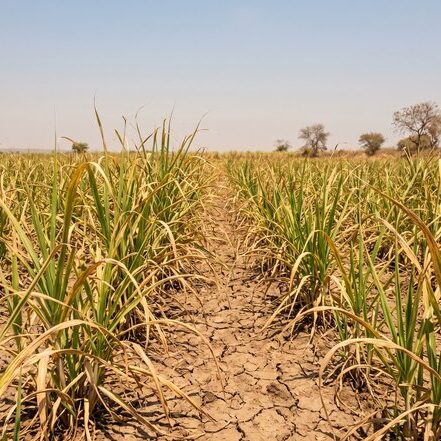
Kolhapur: Delayed monsoon conditions and growing pressure on irrigation resources are emerging as key concerns for India’s sugarcane sector, raising uncertainty over crop prospects in major producing regions and the outlook for future sugar availability.
With rainfall remaining below normal during the initial phase of the monsoon, concerns are increasing over soil moisture, crop establishment and water availability across agricultural areas. As the planting window narrows in several regions, attention is now focused on whether rainfall activity improves in the coming weeks.

Recent sowing data reflects the cautious start to the season. According to the Ministry of Agriculture and Farmers Welfare, sugarcane coverage across India reached 54.08 lakh hectares as of June 12, 2026, remaining about 4.76 lakh hectares lower than last year’s final coverage of 58.84 lakh hectares. However, current planting remains broadly in line with the five-year average area of 54.20 lakh hectares recorded between 2020–21 and 2024–25.
Even so, weather conditions during the coming weeks are expected to play an important role in determining crop performance.
India’s sugar industry relies heavily on cane production from Maharashtra, Uttar Pradesh and Karnataka, which together contribute the majority of the country’s sugar output. Among these regions, areas dependent on irrigation and groundwater remain particularly exposed to fluctuations in monsoon rainfall.
Industry observers note that the impact of delayed rainfall extends beyond planting progress. Lower rainfall can reduce reservoir storage, restrict canal irrigation and increase dependence on groundwater extraction, intensifying pressure on water resources already under strain.
Sugarcane is especially vulnerable because of its long growing cycle and continuous water requirement. Any prolonged moisture deficit could affect crop development, influence cane yields and reshape production expectations for sugar mills in the upcoming crushing seasons.
There are also concerns that continued uncertainty over rainfall and irrigation access may influence farmer decisions. In areas facing water limitations, some growers could reassess cropping choices and shift part of their land toward less water-intensive alternatives, which may eventually affect cane availability.
Agriculture experts point out that irrigation shortages also increase production costs as farmers rely more on private water arrangements and additional field management measures to sustain crop growth.
The evolving weather situation has renewed focus on efficient water use, improved irrigation practices and balancing agricultural production with available water resources.
With monsoon performance expected to remain decisive through the coming weeks, the sugar sector will continue to monitor rainfall trends, reservoir levels and crop conditions across major cane-growing regions.
A sustained revival in rainfall could stabilise crop conditions and reduce pressure on irrigation systems, while an extended dry spell may create additional challenges for farmers and the wider sugar value chain in the seasons ahead.















