
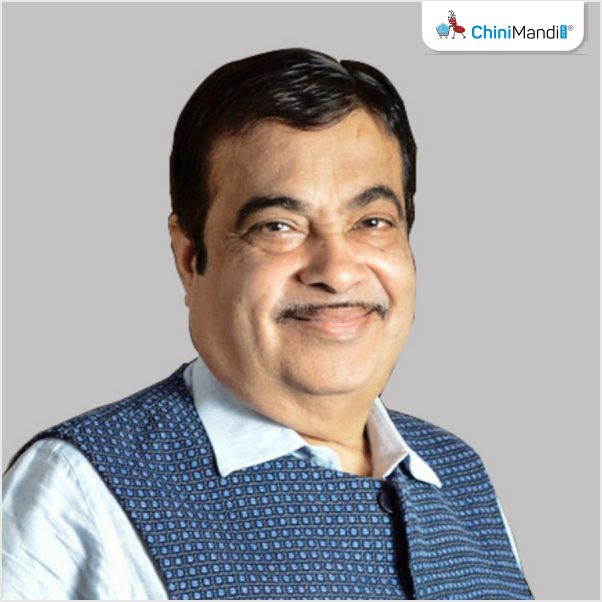
New Delhi: Union Road Transport and Highways Minister Nitin Gadkari has strongly defended India’s ethanol blending programme, saying the recent tensions in West Asia highlight the country’s need to reduce its dependence on imported fossil fuels and accelerate the transition to alternative fuels.
In an interview with CNN-News18, Gadkari said India’s long-term energy security depends on expanding the use of ethanol, hydrogen and electric vehicles as part of its goal of achieving energy self-reliance.

“India must reduce its dependence on imported fuels. The recent West Asia crisis has shown how vulnerable energy imports can make us. Atmanirbhar Bharat in the energy sector is the ultimate goal,” he said.
Rejecting criticism that ethanol production diverts food crops for fuel, Gadkari said ethanol can be produced from a wide range of feedstocks, including agricultural waste and organic material.
“Urban, centralised thinkers make such arguments, saying that ethanol is just alcohol. But ethanol can be produced from a wide range of sources. It can even be made from rotting fruits and vegetables,” he said.
He added that expanding ethanol production would improve India’s energy security while reducing pollution.
Responding to concerns over the use of E20 petrol, Gadkari said the government’s transition to ethanol-blended fuel has been transparent and that misinformation was creating unnecessary doubts among consumers.
“The public is well aware of the facts. The policy and roadmap for transitioning to alternative biofuels have been discussed transparently and communicated at every stage. The ultimate objective is to achieve energy self-reliance and realise the vision of an Atmanirbhar Bharat,” he said.
The minister also rejected suggestions that vehicle problems could routinely be linked to ethanol-blended fuel.
“Like any machine, automobiles can develop faults. No technology is 100 per cent perfect. If a vehicle develops an issue, owners should have it inspected by the dealer and use insurance where applicable. Not every mechanical problem can be attributed to ethanol blending,” he said.
Reiterating the government’s position, Gadkari said E20 petrol is safe for both existing and new vehicles.
“E20 fuel is safe for both existing and new vehicles. Misinformation is being spread to create confusion, while some criticism is politically motivated rather than based on facts,” he said.
Highlighting the benefits of ethanol production from maize, Gadkari said the policy had improved returns for farmers.
“We decided to promote the production of ethanol from maize, and the Cabinet approved the decision,” he said.
According to Gadkari, maize prices increased significantly after the policy was introduced.
“At that time, the market price of maize was around ₹1,200 per quintal, while the Minimum Support Price (MSP) was ₹1,800 per quintal. As soon as the decision was implemented, the price of maize rose to around ₹2,800 per quintal,” he said.
The minister said the ethanol economy has the potential to raise farm incomes while reducing India’s dependence on imported crude oil.
Making the economic case for alternative fuels, Gadkari said India has spent nearly ₹22 lakh crore on fossil fuel imports since 2004.
“India has imported fossil fuels worth nearly ₹22 lakh crore since 2004, with massive amounts of money flowing out of the country,” he said.
He also linked cleaner fuels to improved air quality, noting that around 40% of India’s air pollution is associated with the transport sector.
“My mission is to reduce this pollution,” Gadkari said.
While strongly backing ethanol, the minister said it is only one part of India’s broader clean mobility strategy, which also includes hydrogen and electric vehicles.
“I also strongly promote hydrogen as a fuel and advocate the use of electric vehicles,” he said, adding that India remains committed to achieving net-zero carbon emissions by 2070 through the adoption of multiple clean fuel technologies.















