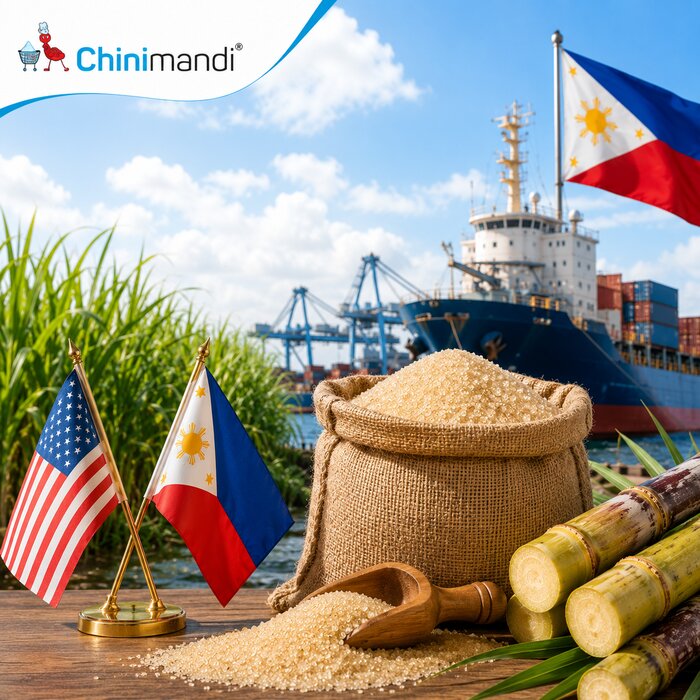
The Philippines has retained a preferential export quota of 145,235 metric tons raw value (MTRV) of raw cane sugar to the United States for the 2027 fiscal year, marking the fourth consecutive year that the country has received the same allocation.
According to a notice issued by the Office of the U.S. Trade Representative (USTR), the Philippines secured the second-largest country allocation under the U.S. tariff-rate quota (TRQ) programme for the fiscal year running from October 1, 2026, to September 30, 2027, Manila Bulletin reported.

The Dominican Republic received the largest allocation at 189,343 MTRV, while Brazil’s quota was reduced to 100,000 MTRV from 155,993 MTRV, moving the Philippines into second place among quota holders.
The TRQ programme allows participating countries to export specified volumes of raw cane sugar to the U.S. at lower tariff rates. Country allocations are based on historical export volumes and consultations with other quota-holding nations.
The Philippines has been allocated 145,235 MTRV annually since FY2024. However, it reduced its shipment commitment for the current FY2026 to 100,000 MTRV, after delaying a decision on whether to fully utilise its quota.
The Department of Agriculture later approved exports of 100,000 metric tons of raw sugar to the U.S. to reduce domestic inventories following higher sugar production last season.
Agriculture Secretary Francisco Tiu Laurel said exports under the TRQ would help ease downward pressure on domestic sugar prices, as shipments to the U.S. fetch higher returns than local sales.
According to the Sugar Regulatory Administration (SRA), millsite prices of raw sugar fell about 16% year-on-year to around ₱2,239 per 50-kg bag in June. SRA data also showed that the Philippines had exported 98,578 metric tons of raw cane sugar to the U.S. as of July 5.
The USTR has allocated 1.06 million MTRV of raw cane sugar quotas among 39 countries for FY2027 and plans to distribute the remaining 55,993 MTRV before the fiscal year begins on October 1. It added that quota allocations remain subject to verification of sugar origin and certification requirements under World Trade Organization rules.