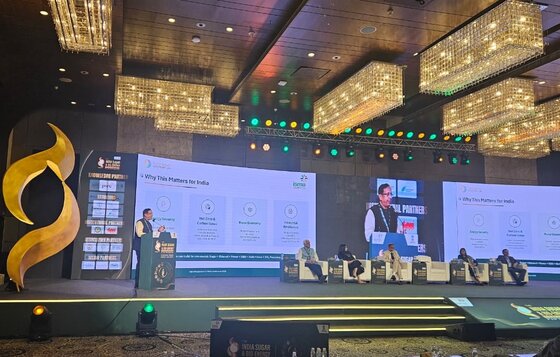
New Delhi: Sugar mills should look beyond sugar and ethanol and develop integrated biorefineries that can convert cane juice, molasses, bagasse, press mud and other byproducts into renewable gas, biofuels, fertilisers, green carbon dioxide and other value-added products, Dilip Kumar Khare, Founding Director of the World Biogas Association, said at the Indian Sugar & Bio-energy Manufacturers Association (ISMA) conference 2026.
Khare said the sugar industry could create greater value by keeping more materials within the industry’s own ecosystem instead of using them mainly for combustion or selling them as low-value products. He stressed the need to find productive uses for the large quantities of material generated by sugar and compressed biogas (CBG) projects.

He said nutrients recovered from digestate should be returned to agriculture, particularly because sugarcane removes nutrients from the soil during cultivation. According to Khare, recycling these nutrients could strengthen the connection between sugar production, agriculture and the rural economy.
He also called for greater attention to biogenic carbon dioxide generated by biogas and CBG plants. Carbon benefits from such projects, he said, need proper verification so that the industry can obtain additional revenue from carbon value rather than simply burning the available material.
Khare said sugar refineries should consider CBG, nutrients and carbon dioxide as part of the overall sugar industry ecosystem. He cited emerging technologies that use materials such as lignin from digestate to develop new products as examples of the opportunities available from further processing of byproducts.
The World Biogas Association representative also highlighted the potential to convert biogas into other fuels and energy products. He said the industry should examine opportunities for producing biofuels such as renewable dimethyl ether (rDME) and bio LPG, which could potentially support rural cooking needs and reduce dependence on conventional LPG.
Khare said the development of such integrated systems could contribute to energy security, lower carbon emissions and strengthen rural economies. He added that industrial resilience would require sugar mills to optimise their operations based on available feedstock, markets and local conditions rather than adopting a uniform approach.
Comparing India with Brazil, Khare said the two countries have different sugarcane production systems. While Brazilian cultivation is largely supported by rainfall, Indian sugarcane production depends heavily on irrigation, making it important to develop solutions suited to India’s agricultural conditions.
He said not every sugar mill would necessarily need to establish a biorefinery, and investment decisions should be based on market conditions and the suitability of available feedstocks.
Responding to a question on the use of gas from CBG plants, Khare said many projects in India are facing difficulties because their supply and market linkages are not fully developed. He noted that a significant number of plants are not operating effectively because of challenges in securing suitable feedstock and managing the fertiliser products generated from the process.
Khare also cautioned against treating bagasse as the primary feedstock for biogas production. He said bagasse could instead be directed towards second generation biofuel ethanol, while other available feedstocks could be considered for biogas production.
He said materials such as Napier grass could serve as supplementary feedstock, although its water and energy requirements need to be considered. The focus, he added, should be on selecting the most suitable feedstock for each process and ensuring that the entire system delivers value to the sugar industry and surrounding rural economy.