India is stepping up its ethanol ambitions, with the expected launch of a Toyota Innova capable of running on 100% ethanol in October bringing the E85-E100 transition into sharper focus, reported the Hindu Businessline.
The move comes as India looks beyond its E20 programme, which created a large assured market for ethanol blended with petrol. A wider shift towards higher blends would require significantly more ethanol, along with vehicles and infrastructure capable of using them.

The key challenge, however, is feedstock.
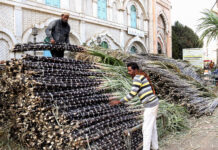
Industry participants at Tefla’s Bharat Ethanol Forum 2026 and Maize Markets Summit & Expo 2026 in Mumbai stressed the need to expand ethanol production beyond sugarcane and diversify into maize, rice and agricultural residues.
India’s maize productivity of around 3-4 tonnes per hectare remains well below the 11-12 tonnes achieved in the US. Industry experts said higher yields would require better seeds, farming practices, mechanisation and greater investment in agricultural research.
Rajasthan Governor Haribhau Bagde said expanding ethanol production from sugarcane, maize and agricultural residues could help reduce India’s dependence on imported crude and limit the impact of global energy and geopolitical disruptions.
The expected E100 Innova launch comes alongside a white paper by the All India Distillers’ Association (AIDA) and IIT Delhi that proposes a 10-point roadmap for expanding flex-fuel vehicles and gradually moving from E20 towards E85 and E100.
Higher ethanol blends require vehicle modifications, including ethanol-compatible seals and components, corrosion-resistant materials, adaptive engine calibration and higher-capacity fuel injectors.
Consumer economics will also determine adoption. Since ethanol contains less energy per litre than petrol, the AIDA-IIT Delhi paper recommends comparing fuels on a cost-per-kilometre basis. It cites an E85 price around 25% below petrol as an illustrative level for achieving comparable running costs.
Two-wheelers could be particularly important for higher ethanol blends as they account for more than 60% of India’s petrol consumption. Greater adoption in the segment could significantly increase ethanol demand.
The broader E85-E100 push, therefore, creates a new supply challenge for India. Scaling higher ethanol blends will depend not only on compatible vehicles and retail infrastructure but also on securing sufficient feedstock, expanding production capacity and improving the economics for consumers.