
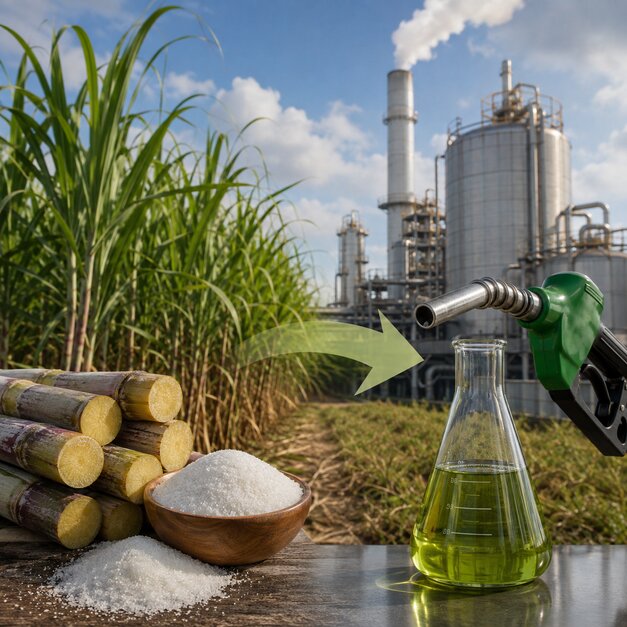
Chandigarh: The Centre’s decision to exclude sugarcane-based ethanol from the E20 petrol-blending programme for 2026-27 could have wider implications for Punjab’s sugarcane farmers, cooperative sugar mills, poultry and dairy industries, and groundwater resources, according to the Shiromani Punjab Forum, Babushahi reported.
The independent think tank on Wednesday released an 11-page discussion paper titled Sweet Are the Uses of Adversity — and Diversity, authored by its Founder and Convener KBS Sidhu, a former Special Chief Secretary of Punjab. The Forum has invited stakeholders to examine the proposals and share their views.

Under the Centre’s decision, public-sector oil marketing companies will not procure ethanol made from sugarcane juice, sugar syrup and B-heavy molasses for petrol blending under the 20% ethanol-blending programme. The restriction does not extend to alcohol used in liquor production, which is regulated by state governments.
The Forum said the policy change could delay payments to sugarcane farmers and adversely affect cooperative sugar mills that have invested in distilleries. It could also increase competition for maize between ethanol manufacturers and Punjab’s poultry, dairy and starch industries, potentially raising costs for these sectors.
The discussion paper also draws attention to the differences in water consumption associated with ethanol production from various feedstocks. Citing official figures, it estimates that producing one litre of ethanol from rice requires around 10,790 litres of water, compared with 4,670 litres for maize and 3,630 litres for sugarcane.
Another concern highlighted in the paper is the tendering of 3.25 billion litres of ethanol from Food Corporation of India (FCI) rice for the current year. The paper states that the rice is being sold to distilleries at ₹2,390 per quintal, the price applicable to welfare schemes, while the FCI’s economic cost is around ₹4,100 per quintal.
Sidhu said Punjab bears multiple costs associated with using rice for fuel production. “Punjab ends up paying for the fuel tank three times: in groundwater pumped for paddy, in the free power that pumps it, and in the gap between FCI’s cost and its sale price,” he said.
He added that the prevailing situation could create an opportunity to accelerate crop diversification in Punjab by promoting kharif maize cultivation as an alternative to water-intensive spring maize.
The Forum’s paper argues against imposing a permanent ban on sugarcane-based ethanol. Instead, it proposes a publicly disclosed mechanism to determine the diversion of sugar towards ethanol production based on closing sugar stocks.
Among its seven recommendations, the paper proposes linking feedstock prices to water consumption and establishing a Punjab kharif maize compact that provides assured procurement and grain dryers at mandis. It also calls for defined sowing windows for spring and summer maize in groundwater red-zone blocks.
The remaining proposals include keeping genetically modified corn out of the E20 supply chain, conducting a nationwide water audit of the ethanol programme, retaining the B-heavy molasses route for Punjab’s cooperative sugar mills, and tightening regulations governing distillery locations and effluent discharge.
Sidhu clarified that the document was intended to initiate discussion rather than present a final position. The Forum has invited farmers, sugar mills, distillers, representatives of the poultry and dairy industries, agricultural scientists, government officials and political parties to review the recommendations and submit their suggestions.















