Yamunanagar: Sugarcane cultivation is losing ground in Haryana’s Yamunanagar district as rising production costs, labour expenses and inadequate returns prompt farmers to shift towards poplar plantations, which they consider a more economically viable and less labour-intensive option, The Tribune reported.
Fields that were once dominated by sugarcane are increasingly being converted into poplar plantations, reflecting a change in farmers’ preferences towards crops and plantation activities that require less regular investment and labour.

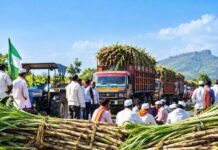
Farmers say sugarcane cultivation involves substantial expenditure on fertilisers, seeds, pesticides, irrigation and labour. Additional costs are incurred during harvesting, cutting, loading and transportation of cane to sugar mills and purchase centres, making the crop less attractive despite year-round effort.
According to figures from the command area of Saraswati Sugar Mills, Yamunanagar, sugarcane acreage declined from 99,000 acres in 2017-18 to around 76,500 acres in 2025-26. The area further fell to approximately 62,500 acres in 2026-27, marking a reduction of nearly 14,000 acres in just one year.
Sanju Gundiana, district president of the Bharatiya Kisan Union (Charuni), said the cost of cultivating sugarcane on one acre could exceed ₹1.10 lakh. Apart from expenses on inputs, farmers have to bear the costs of harvesting, loading and transporting the crop to mills. He said the returns often failed to justify the investment and the effort involved in cultivation.
Farmer leader Satpal Kaushik said the recent increase of ₹15 per quintal in the sugarcane price was inadequate, pointing out that farmers had been demanding ₹600 per quintal. He said rising prices of fertilisers, pesticides, diesel, labour and irrigation had increased production costs, making sugarcane cultivation financially difficult. Kaushik urged the government to raise the cane price to at least ₹600 per quintal to prevent further decline in acreage.
However, DP Singh, senior vice-president (Administration) of Saraswati Sugar Mills, Yamunanagar, said sugarcane remained a better option than the paddy-wheat cropping cycle in dealing with weather-related risks such as floods, unseasonal rain and hailstorms. He maintained that sugarcane offered better returns than other crops and urged farmers to increase its cultivation.
Singh also said sugarcane planted using wide-spacing methods, with rows four to five feet apart, would be harvested mechanically this season, with harvesters being used for the purpose.