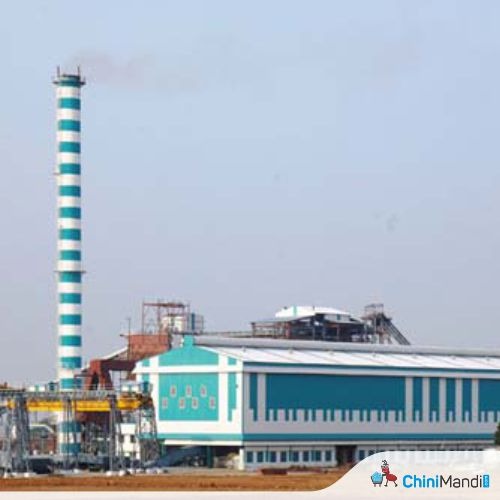
Mumbai: The Maharashtra government on Monday set up a committee headed by the Sugar Commissioner to prepare a model for keeping the state’s cooperative sugar mills running and making them financially viable, according to a Government Resolution (GR) issued by the state Cooperation Department.
The model is to be prepared through a joint study by the Cooperation Department and the State Cooperative Bank, and the committee will submit a detailed report with recommendations to the government within two months, the GR stated. The decision follows meetings of a ministerial committee held on September 9 and October 12, 2026.

According to the GR, Maharashtra had more than 200 cooperative sugar mills in operation during the 2000s, but the number of mills actually crushing cane has fallen below 100 over the past 25 years. Several financially distressed mills have gone into liquidation, some have been sold and others remain shut, while 30 to 32 cooperative mills are being run by private managements on lease or partnership arrangements.
As a result, only about 75 cooperative mills are now crushing on their own, the GR noted. It said the figure would have been even lower had 33 mills not received financial assistance from the National Cooperative Development Corporation (NCDC) against state government guarantees over the past two years, adding that even this support has not fully restored their health.
The committee, chaired by the Sugar Commissioner, will include the Commissioner of Cooperation and Registrar of Cooperative Societies, the Administrator or Manager of the Maharashtra State Cooperative Bank, and representatives of the Vasantdada Sugar Institute, the Reserve Bank of India (RBI), NABARD, the Maharashtra State Cooperative Sugar Factories Federation and the West Indian Sugar Mills Association. It will also have representatives of cooperative and private mills, a sugarcane research centre, a cane seed expert and two industry experts to be recommended by the Sugar Commissioner.
On cane development, the panel will look at seed supply chains and tissue culture, enforcement of the Seeds Act, 1966, the use of artificial intelligence, GPS, drones and mechanisation, soil health and drip irrigation, and maturity-based harvesting. It will also draft a framework for a sucrose-based cane pricing system and examine norms for bringing cane from distant areas under zoning rules, including who should bear the extra cost.
The committee has also been asked to recommend a revised staffing structure for the Sugar Commissionerate, in line with plans to develop the sugar industry as an energy hub and meet the national “Sankalp 2047” goals.
On by-products, the GR directs the panel to design an integrated zero-waste bio-refinery model covering 10 products, including compressed biogas (CBG), first and second generation ethanol, multi-feed distilleries, sustainable aviation fuel (SAF), cogeneration, solar power, green hydrogen, bio-chemicals and bio-bitumen. It will assess the viability of a funding pattern in which the Centre contributes 20 per cent, the state 10 per cent and the mill 70 per cent.
For reviving distressed mills, the committee will work with the Maharashtra State Cooperative Bank on mill-wise viability studies, a separate cash credit account for each season with full repayment before the next season begins, escrow accounts, loan moratoriums, external investor participation, a revival fund, and debt resolution plans for mills classified as non-performing assets with RBI support. It will also frame a policy on capital assistance routed through the NCDC.