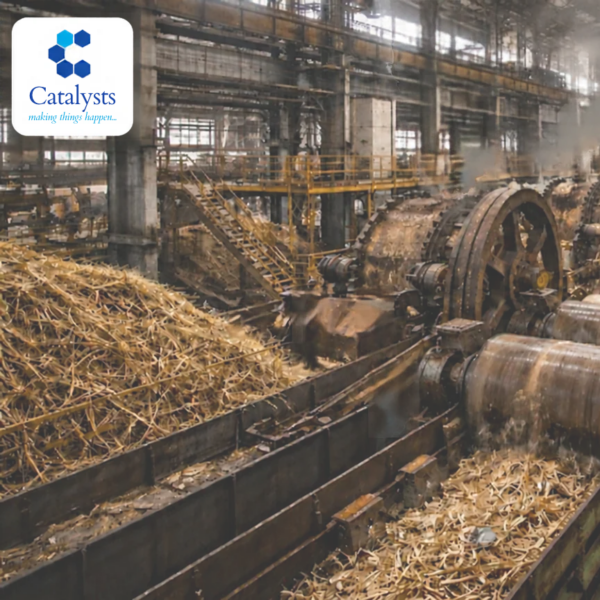
A Season of Scale, but Also of Scrutiny
India’s 2026–27 sugar crushing season has opened with higher early production figures than the previous year. In October, sugar production reached approximately 8.45 lakh tonnes, compared with around 1 lakh tonnes during the same period last year. The number of operational mills also rose from 31 to 152. However, higher initial output does not necessarily signal an easier season ahead. The crushing window is expected to be considerably shorter than the usual five to six months, with operations beginning later than usual and the season expected to conclude by January. This compressed timeline could significantly limit the overall volume of cane crushed, making it even more important for mills to maximise the sugar recovered from every tonne they process.

By mid-November, more than 310 mills were operational, with national sugar production estimated at approximately 24 lakh tonnes. Maharashtra accounted for a significant share, contributing around 18.5–18.75 lakh tonnes. These figures reflect a strong start to the season. However, production volumes tell only part of the story. The more important measure of performance is how efficiently mills convert the sugarcane they crush into recoverable sugar.
Is Higher Sugar Production the Same as Better Recovery?
Higher production does not automatically indicate better recovery. The distinction becomes clearer when recovery figures are considered alongside production volumes.
By mid-November, the national average sugar recovery stood at approximately 8.33%, compared with 7.75% during the corresponding period last season. Maharashtra recorded an improvement to around 8.65% from 7.70%. Uttar Pradesh, however, stood at approximately 8.65%, marginally below its previous season’s 8.75%, while Karnataka recorded around 7%, compared with 7.10%.
These are early-season figures, and recovery can change as the season progresses and cane maturity improves. Nevertheless, the differences highlight why mills must look beyond production totals and pay close attention to the efficiency of sugar recovery.
What Is a Decimal Point of Recovery Worth?
Even a small improvement in recovery can translate into substantial additional sugar output. Consider a mill crushing 10 lakh tonnes of cane during a season. An improvement of just 0.1 percentage point in recovery represents approximately 1,000 additional tonnes of sugar. A 0.5 percentage-point improvement translates into approximately 5,000 additional tonnes.
The commercial significance becomes clearer when these volumes are valued against recently reported regional ex-mill prices. A 0.1 percentage-point improvement could represent an additional gross sugar value of approximately ₹5.1 crore in Maharashtra, ₹5.6 crore in Uttar Pradesh and ₹5.2 crore in Karnataka. At 0.5 percentage point, the indicative values rise to around ₹25.5 crore, ₹28 crore and ₹26.25 crore, respectively. These are illustrative estimates, not additional profit. Actual realisation depends on sugar grade, market prices and operating costs.
Where Recovery and Efficiency Come Under Pressure
Recovery is influenced by several factors, many of which begin before cane reaches the mill. Cane quality, maturity, harvesting delays and deterioration during transportation or storage can affect the sucrose available for recovery.
Contamination and microbial activity can create further challenges. Issues such as dextran formation can affect processing efficiency and contribute to avoidable sugar losses. Variations in operating conditions and inconsistent process control can add to the challenge, making it difficult for mills to maintain stable performance throughout the season.
Managing these factors requires a broader approach: identifying the sources of loss, understanding their impact and responding before they affect overall recovery.
Technology and Process Control: From Monitoring to Improvement
Technology has an increasingly important role in helping mills move from routine monitoring to informed process improvement. Timely laboratory analysis, process monitoring, automation and data-led decision-making can help identify variations, track performance and support corrective action.
Alongside these capabilities, biotechnology and enzyme-based solutions offer targeted ways to address specific process challenges. When selected and applied appropriately, they can help manage unwanted microbial activity, improve process consistency and support more efficient operations.
The value lies not simply in adopting new technology, but in applying the right intervention to the right problem.
The Season’s Real Opportunity: Recover More from Every Tonne
For sugar mills, the opportunity this season is not limited to increasing crushing capacity or producing more sugar. It is also about reducing avoidable losses and extracting greater value from every tonne of cane processed.
The Catalysts Group brings together biotechnology expertise, enzyme-based solutions and practical process knowledge to help mills address challenges affecting efficiency and recovery. By understanding individual plant conditions and identifying targeted interventions, its approach focuses on improving process consistency, managing contamination-related concerns and supporting better operational performance. Depending on the mill’s conditions and the challenges addressed, targeted interventions can offer the potential for recovery improvements in the range of 0.1–0.3 percentage points.
Ultimately, a successful season should not be measured only by how much a mill crushes, but by how much value it recovers.