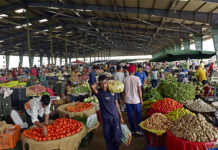
India’s retail inflation could face further upward pressure in the coming months amid elevated food prices, an unfavourable base effect, weather-related uncertainties and increased demand during the festive and wedding seasons, according to the Finance Ministry’s November 2026 Monthly Economic Review accessed by ChiniMandi.
Retail inflation, measured by the Consumer Price Index (CPI), rose by 55 basis points to 6.09% in October 2026 from 5.54% in September, driven primarily by higher food inflation and an unfavourable base effect. Food inflation increased to 8.94%, while core inflation, which excludes food, household and transport fuel, accelerated to 4.51% from 4.33% in the previous month.

The Finance Ministry said the unfavourable base effect could continue to influence inflation in November. Demand for food and non-food items during the extended festive period and the onset of the wedding season could also add to price pressures in the coming months.
Weather-related uncertainties pose another risk to the inflation outlook. The World Meteorological Organisation has warned that an exceptionally strong El Niño event could peak towards the end of 2026, potentially adding to inflationary pressures. However, the positive Indian Ocean Dipole, currently at 0.8 degrees Celsius, could have an offsetting impact if it persists.
The report also highlighted that inflationary pressures remained uneven across food commodities. Sugar inflation stood at 27% in October, moderating from 30% in September, but remained elevated. Prices of rice, arhar, urad and edible oils also recorded significant year-on-year increases.
Geographically, retail inflation remained higher in rural areas at 6.63% compared with 5.41% in urban areas. Rural food inflation stood at 9.1%, against 8.7% in urban centres, reflecting the greater weight of food in rural consumption baskets.
External factors could further complicate the inflation outlook. Continued conflict in the Middle East and risks to shipping through the Strait of Hormuz could keep oil import costs and maritime freight rates volatile, potentially transmitting supply-side pressures to wholesale and retail prices.
However, the Finance Ministry said the recent moderation in global crude oil prices below $100 per barrel in early November and the strengthening of the rupee could help contain imported inflationary pressures, provided these trends continue.
Despite the near-term risks, more than half of the items in the CPI basket, accounting for around 52% of the basket, continued to record inflation below the 4% target in October, indicating that price pressures were not uniform across commodities.