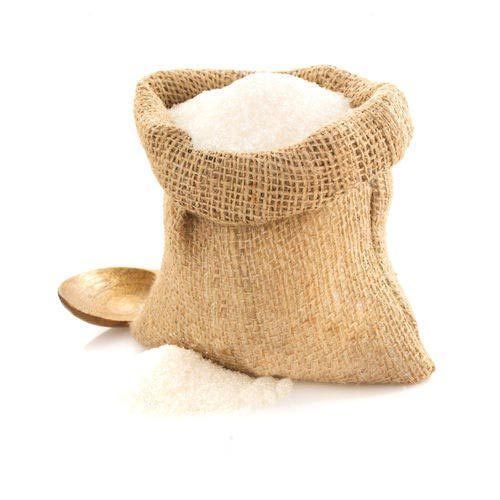
At the 34th meeting of the Standing Advisory Committee (SAC) held in New Delhi, the Indian Sugar & Bio-Energy Manufacturers Association (ISMA) and the National Federation of Cooperative Sugar Factories (NFCSF) jointly urged the Government to grant sugar a 100% exemption from compulsory packaging in jute bags for Jute Year 2026–27, citing serious public health risks, quality incompatibility, and a mounting economic burden on the industry and over 50 million sugarcane farmers.
The joint statement outlined the key grounds for the exemption

- Carcinogenic risk to consumers: Jute is treated with jute batching oil (JBO), a petroleum-based compound whose PAH content is scientifically and judicially established as carcinogenic. Residues can migrate into sugar, posing a health hazard to consumers, including children and pregnant women.
- Prior SAC concern already on record: Citing these risks, the SAC’s 33rd Meeting (October 2025) had already ordered an independent expert study with AIIMS, FSSAI, BIS and the Jute Commissioner’s office — a study that remains pending. Pending the outcome of the said study, the SAC also reduced the mandatory jute packaging requirement for sugar from 20% to 15%, reflecting its considered view that the existing packaging requirements warranted interim reconsideration.
- Sugar and jute are fundamentally incompatible: Sugar is highly hygroscopic; jute retains moisture, causing caking, lump formation and reduced shelf life.
- Substantial economic burden: Jute bags cost 2.5–3 times more than other alternatives, adding an estimated ₹800 crore a year in costs — funds that could otherwise support sugarcane farmers.
- Raw jute production and availability constraints: The Commissioner for Agricultural Costs and Prices (CACP) itself flagged that the compulsory reservation ties up scarce raw jute in traditional sacking, leaving insufficient material for diversified, higher-value products such as shopping bags and home décor — limiting the jute economy’s own growth, employment and export potential.
- Bangladesh is the ultimate beneficiary: By locking India’s raw jute into low-value mandatory sacking instead of freeing it for value-added, export-oriented manufacturing, the compulsory packaging regime cedes the higher-value global market to Bangladesh — which already earns more from jute exports than India, despite India producing more raw jute. Deepak Ballani, Director General, ISMA said “The scientific and judicial evidence on JBO’s carcinogenic content is now overwhelming. Sugar reaches every household, including children, and it cannot continue to be packed in bags treated with a petroleum-based carcinogen while an SAC-directed independent study remains pending.”
- Prakash Naiknavare, Managing Director, NFCSF, said “Exempting sugar from mandatory jute packaging is a win-win: it protects product quality and consumer health, while freeing up raw jute for the diversified, value-added products that can truly secure the jute sector’s long-term growth, employment and export competitiveness.”
ISMA and NFCSF have asked the SAC to recommend complete exemption of sugar from compulsory jute packaging.
They have urged that the mandate be suspended until the independent expert study is completed and its findings considered by the Central Government — consistent with the statutory factors under Section 4 of the Jute Packaging Materials (Compulsory Use in Packing Commodities) Act, 1987.