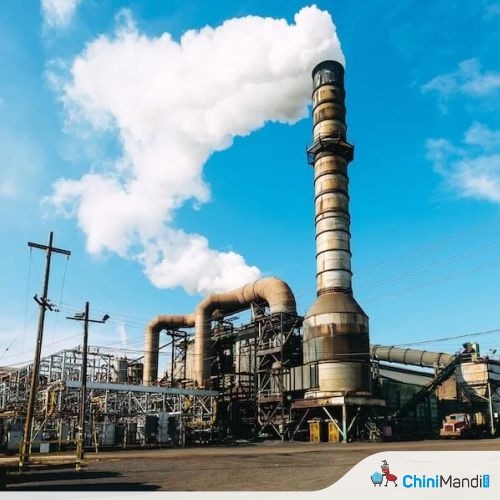
Amuru: Atiak Sugar Factory in Uganda’s Amuru district is now targeting a resumption of sugar production towards the end of 2027 or early 2028, as it works to build a sufficiently large sugarcane estate to sustain continuous factory operations, The Independent Uganda reported, citing Uganda Radio Network.
The facility, commissioned in October 2020 and owned by Horyal Investments Holding Company Ltd in partnership with the government — which holds a 49 per cent stake through the Uganda Development Corporation (UDC) — suspended production in March 2022 following a shortage of sugarcane from plantations in the Amuru and Lamwo districts, compounded by repeated fire incidents.

Following a government financial injection of 108 billion shillings, the factory transitioned to mechanised agriculture in late 2023. Management subsequently began sugarcane planting on 4,000 acres using newly acquired irrigation systems, heavy-duty trucks, and tractors to replace manual labour.
Dr Patrick Birungi, Executive Director of the Uganda Development Corporation, told Uganda Radio Network that the sugarcane planted in 2023 on 4,000 hectares served as seed multiplication stock, which is now being replanted across a further 4,000 hectares. He explained that the initial plantings were not intended for crushing but for generating adequate planting material to eventually cover the land area the factory requires.
Dr Birungi said the factory’s crushing capacity of 1,650 tonnes of sugarcane per day would require approximately 20,000 acres of established cane before full and continuous production could begin. He noted that without a sufficiently large and sequenced estate, the factory could only operate for about two months before running out of raw material. He added that the management projected planting sugarcane on 20,000 acres by the end of this year, which would provide the minimum base needed to run the factory without interruption.
On the irrigation front, factory management had in October 2024 requested additional government funding to install water pipelines from the River Nile to reduce dependence on rainfall and the four existing water reservoirs. Dr Birungi confirmed that works on a 22-kilometre water pipeline have commenced, though he did not disclose the additional funds required to complete the infrastructure.
Dr Paul Ayella, Director for Irrigation at the factory, said the first and second phases of the irrigation project design had been completed, covering on-farm infrastructure and a water conveyance system from the farm to the River Nile. He noted that the outstanding challenge was securing community consent for the transmission pipelines, which pass through privately held land. Compensation arrangements, resettlement action plans, and the signing of Memoranda of Understanding (MOUs) on joint infrastructure use with local communities were currently under way, he said.
The factory has also embarked on opening an additional 4,000 hectares of land for sugarcane cultivation, of which 2,000 hectares already have seedcane in the ground.
The project has not been without scrutiny. In October 2024, Leader of Opposition Joel Ssenyonyi raised concerns about the continued government expenditure on the factory despite its prolonged non-operational status, following a tour of the facility with his shadow cabinet. A report from that visit noted that the management had moved away from its earlier plan to cultivate 60,000 acres of sugarcane across the Atiak and Lamwo districts through farmer cooperatives, opting instead to concentrate planting on 25,000 acres of land directly owned by the factory.
To date, the government has invested 553.7 billion shillings in the project through UDC, while Horyal Investment Holding Company Ltd has contributed 164 billion shillings towards the joint venture.