
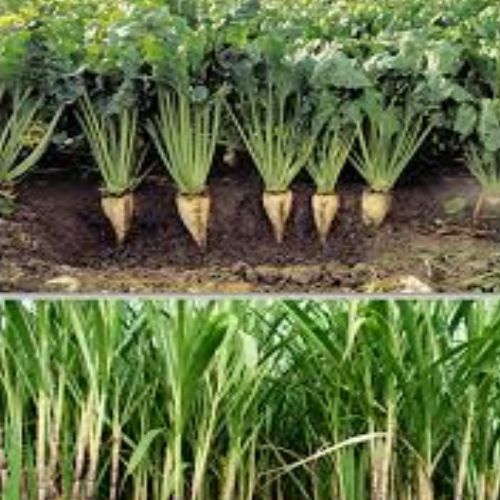
Algiers: Algeria’s largest private conglomerate, Cevital, has launched a $600 million integrated sugar beet farming and refining project in the Ghardaïa region of the northern Sahara, in a move aimed at reducing the country’s heavy reliance on imported sugar, Billionaires.Africa reported. The project is expected to create 5,000 jobs at full capacity.
The initiative was announced on May 5 through Algerian state television. Work has already commenced on a 1,200-hectare agricultural concession in the wilaya of Ghardaïa, with drilling operations underway and having reached 385 metres below the surface. Cultivation trials conducted at the site in 2024 returned sugar extraction rates of between 18 per cent and 20 per cent — results the company described as encouraging given the semi-arid conditions of the location.

A processing complex, including a sugar refinery, is to be constructed alongside the farming site and is scheduled to be operational by 2028. The decision to locate the refinery adjacent to the fields is directly informed by Algeria’s failed attempt to build a sugar beet industry in the 1980s, which collapsed in part because the physical distance between farms and processing facilities caused the beet to deteriorate before it could be refined. Since sugar beet must be processed rapidly after harvest to retain its sugar content, Cevital has built co-location into the core design of the current project.
The strategic rationale for the investment is significant. Algeria is Africa’s largest sugar importer and among the biggest buyers of the commodity globally, importing approximately 2.3 million tonnes annually. According to data cited by Billionaires.Africa from Trade Map, Algeria’s sugar import bill exceeded $931.7 million in 2023, representing a substantial draw on the country’s foreign currency reserves. The government has been pressing to reduce this exposure as part of a wider import substitution drive.
In addition to sugar, the project is expected to generate revenue from refining by-products. Beet pulp and molasses produced during sugar extraction have established commercial value in the animal feed industry, offering the project a secondary income stream alongside its primary output.
Cevital was founded by Issad Rebrab in 1998 and has grown into Algeria’s most diversified private industrial group, with interests spanning agribusiness, glass manufacturing, automobile distribution, steel, home appliances, construction materials, retail, transport, media, and electronics. Rebrab, who is 82, is the only Algerian to feature in the Forbes global billionaire ranking, with an estimated net worth of $3.6 billion as of the March 2026 edition. In 2022, he transferred operational control of the group to his son Malik as Cevital shifted its strategic emphasis more deliberately toward agro-industrial activities.
The Ghardaïa project is the most significant expression of that shift. Its ability to make a meaningful reduction in Algeria’s sugar import bill will depend on whether the semi-arid site can sustain commercial-scale agricultural performance and whether the 2028 refinery commissioning timeline is maintained.















