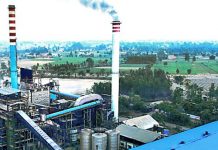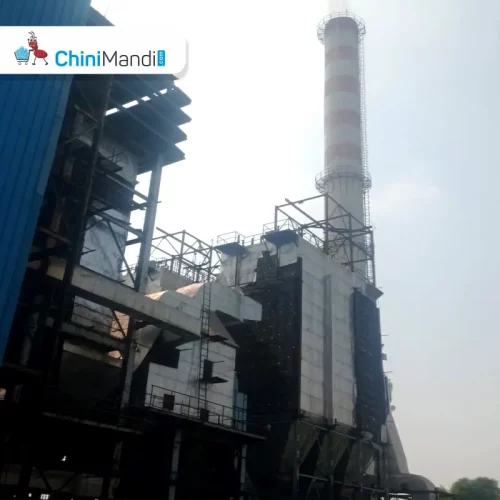
Rangpur: Nearly six years after production was halted, Shyampur Sugar Mill in northern Bangladesh remains closed, even as the government continues to spend around Tk 24 lakh every month on maintaining the facility and paying staff salaries.
The state-owned mill, located in Rangpur’s Badarganj upazila, suspended operations during the 2020-21 crushing season following years of financial losses and a decline in sugarcane production. While the interim government later announced plans to revive several closed sugar mills, residents, workers and farmers say there has been little visible progress at Shyampur, UNB News reported.

The uncertainty surrounding the mill’s future continues to affect thousands of people who once depended on it, including sugarcane growers, workers and local businesses.
A taskforce formed by the Bangladesh Sugar and Food Industries Corporation (BSFIC) recommended reopening Shyampur Sugar Mill and Setabganj Sugar Mill. Acting on those recommendations, BSFIC lifted the suspension order in December 2024 and proposed a three-year financial support plan aimed at restarting sugarcane crushing operations from the 2027-28 season.
However, efforts to revive the mill faced a setback after the Finance Division rejected a proposal seeking Tk 51.70 crore for the 2024-25 and 2025-26 fiscal years.
In its response to the Ministry of Industries, the Finance Division said BSFIC had already received significant operational loans from the government over the past two decades and pointed out that the corporation continues to incur losses. It also noted that the mills were originally closed to reduce subsidy requirements.
Even though production remains suspended, the mill still employs 63 permanent and temporary staff members responsible for administration, maintenance and security.
According to Debashish Singha Roy, Assistant Manager (Store), monthly expenditure on salaries and allowances stands at approximately Tk 24 lakh. He said the mill generates only Tk 6-7 lakh annually by leasing part of its land but still requires staff to safeguard and maintain machinery, buildings, residential quarters and other assets.
Former Sugar Mill Employees’ Union General Secretary Abu Sufian said the mill once served as the economic centre of the region, supporting thousands of families. He said hopes were raised when the government announced plans to reopen the facility, but the absence of visible action over the past year and a half has increased frustration among workers and former employees.
He called on the government to allocate funds in the upcoming budget to modernise and restart the mill.
Established in 1964 at Shyampur Bazar and formally commissioned in 1967, the mill was built on 111.45 acres and designed to crush 1,016 tonnes of sugarcane per day, with an annual sugar production capacity of 10,161 tonnes.
For decades, it played an important role in the agricultural economy of Rangpur and nearby districts. However, losses began mounting after 2000 due to rising liabilities, interest payments, employee provident fund obligations and operational challenges.
A government committee comprising representatives from the industries, commerce, finance and agriculture ministries later recommended suspending crushing operations, leading to the mill’s closure.
While management attributed the losses to declining sugarcane cultivation and ageing machinery, workers and farmers argued that corruption, mismanagement and inefficient staffing were major factors behind the deteriorating financial situation.
The closure has also altered farming patterns in the area. Farmer Fazlul Haque said he stopped cultivating sugarcane after the mill shut down and switched to paddy, wheat, maize and vegetables.
BSFIC officials said about 300 acres of sugarcane have been cultivated this year under the Joypurhat Sugar Mill sub-zone, with harvested cane being transported to Joypurhat for processing.
BSFIC Assistant Manager (Extension) Zahidul Islam said reopening the mill would require long-term preparation, noting that restoring sugar production would take at least three crushing seasons even if funding becomes available immediately.
Local businessman Manik Mia said the closure has weakened the area’s economy, as several thousand families were directly or indirectly dependent on the mill.
Despite the delays, the government has reiterated its commitment to reopening closed state-owned sugar mills. Industries and Commerce Minister Khandakar Abdul Muktadir recently said that any decision on reopening would prioritise the interests of sugarcane farmers and workers while ensuring the mills can operate profitably over the long term.