India’s ethanol industry is preparing for a new investment cycle as the government advances discussions on higher ethanol blending, with producers seeking policy clarity before committing to the next phase of capacity expansion.
Industry representatives say existing production infrastructure is already capable of supporting increased ethanol demand and could scale further once a long-term blending roadmap is announced, Business Today reported.

Speaking on the sector’s outlook, Bharati Balaji, Deputy Director General of the All India Distillers Association (AIDA), said the industry has created significant production capacity and is now positioned to support future growth.
“Today, the industry is sitting on surplus capacity and is fully capable of supplying more ethanol,” Balaji said.
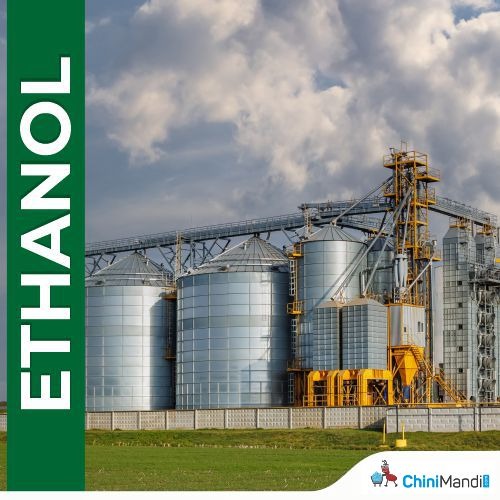
According to AIDA, India’s installed ethanol production capacity currently stands at nearly 2,000 crore litres annually.
For the Ethanol Supply Year (ESY) 2025–26, oil marketing companies are expected to procure around 1,100 crore litres of ethanol.
Balaji said that even after accounting for an additional 300 crore litres that may be absorbed by potable alcohol, pharmaceutical and chemical sectors, the industry would still retain nearly 700 crore litres of surplus production capacity.
The comments come as the government evaluates moving beyond the current blending programme, a development the industry sees as a potential trigger for the next phase of expansion.
Balaji said producers are willing to invest in additional capacity across the country, but policy certainty will be essential.
“Distillers are prepared to invest further and expand capacities across the country, provided there is a clear roadmap for higher blending levels,” she said.
According to the industry body, India’s ethanol programme has already generated environmental gains and contributed to reducing carbon emissions.
AIDA estimates that ethanol blending has helped avoid nearly 8.69 lakh metric tonnes of carbon dioxide emissions.
Balaji said one of the key strengths of India’s ethanol policy has been allowing the use of diversified feedstocks, enabling producers to switch between raw materials based on availability and economic viability.
India currently has around 370 distilleries producing ethanol, with many assessing future expansion opportunities as market demand evolves.
To support wider adoption of higher ethanol blends, AIDA has proposed policy measures including lower GST on flex-fuel vehicles and reduced road and registration taxes by state governments.
The association has also called for greater investment in fuel dispensing infrastructure and consumer-oriented ethanol pricing mechanisms.
Beyond transport applications, the industry is exploring additional avenues for ethanol consumption.
Balaji said AIDA is evaluating the use of ethanol-based cooking stoves as part of broader efforts to expand domestic ethanol utilisation and create new demand channels.